Why Water Supply Pipe Is Getting Smaller
Colorado approved the Water Demand Calculator in August 2026. Learn what UPC Appendix M changes about sizing water supply piping and what it means for your bids.
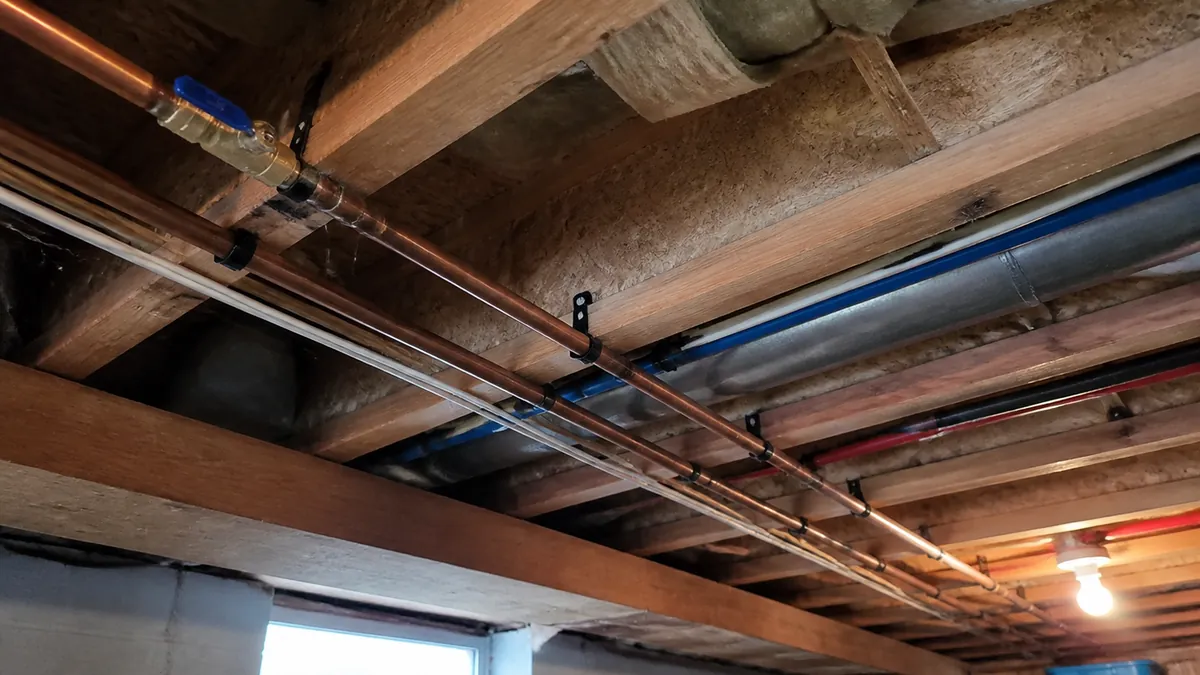
On August 14, 2026, Colorado’s plumbing board approved IAPMO’s Uniform Plumbing Code Appendix M, the Water Demand Calculator, as an alternate method for sizing water supply piping. It is voluntary, not mandatory. If you work in Colorado, you can now size a residential water service and interior supply lines with the calculator instead of the fixture unit tables you have always used.
That is the short version. The longer version is that this has been happening quietly, state by state, for several years, and it changes what a correctly sized house looks like.
What actually changed in Colorado
IAPMO announced the approval in a press release dated August 14, 2026. The state plumbing board voted unanimously to accept Appendix M as an alternative methodology for sizing water supply piping in single family and multifamily buildings.
Worth noting: Colorado adopts the International Plumbing Code, not the Uniform Plumbing Code. The Water Demand Calculator came in as an alternate that sits alongside Chapter 6 of the code Colorado already uses. You do not have to switch code books to use it. That is how most of these adoptions have worked.
By IAPMO’s count, Colorado is the twelfth state to accept Appendix M. The others named in the release are California, Hawaii, Montana, Nevada, New Jersey, New Mexico, North Dakota, Oklahoma, Oregon, Washington, and Wisconsin. Several cities have adopted it separately from their states.
If your shop works in one of those twelve, this is already available to you. If it is not, it is reasonable to expect the question to reach your jurisdiction eventually.
What the Water Demand Calculator is
Traditional water supply sizing runs on fixture units and a demand curve developed by Roy Hunter in the 1940s. You count fixtures, convert them to fixture units, read a peak demand off the curve, and size the pipe to carry it.
The method works. The problem is what it assumes. Hunter built the curve around the fixtures and habits of the 1940s, when a toilet used several gallons per flush and nobody had a low flow showerhead. The curve estimates the worst case moment when an improbable number of those old fixtures run at once.
Today’s fixtures use a fraction of that water. Run the old math on a modern house and you get a pipe sized for demand the house cannot physically produce. IAPMO says the older Hunter method can overestimate design flow rates by up to 27 times for current fixtures.
The Water Demand Calculator replaces the curve with statistical analysis of measured water use in modern homes. IAPMO states its research maintained at least a two times safety factor against real world measured usage, so the output is still conservative. The core spreadsheet is free to download from IAPMO. A paid version called WDC-Pro handles more complex projects.
It covers single family homes, townhomes, duplexes, small multifamily, mid rise and large multifamily, and the residential portions of mixed use buildings. It is a residential tool. It is not a general purpose replacement for commercial sizing.
Why anyone cares about smaller pipe
Oversized supply pipe is not a safety problem. It is a slow, quiet set of costs.
Material and labor go up. Larger pipe, larger fittings, larger service line, more time in the trench. On a single house that is real money. On a multifamily building it multiplies across every unit.
Hot water takes longer to arrive. A larger pipe holds more cold water between the heater and the fixture, and all of it has to run down the drain before the hot arrives. Your customer feels that as a wait at the far bathroom, and it goes down the drain every time.
Water sits longer. This is the part that connects to work you may already be doing. Water that moves slowly through oversized pipe spends more time at room temperature, and stagnation is one of the conditions that favors bacterial growth. It is the same underlying concern behind storage temperature decisions covered in Water Heater Temperature: Scald Risk vs. Legionella, and it belongs in the same category of quiet water quality issues as the cross connections you walk past every day.
IAPMO publishes its own savings estimates for right sized systems, including per home and per building figures. Treat those as the promoter’s numbers. The honest way to find out what it does to your work is to size one job both ways and compare your own material list.
What this means for your bids
Here is where it gets practical, and slightly uncomfortable.
If you start sizing with the calculator and your competitor does not, your material list gets shorter and your number gets lower on the same house. That is a competitive advantage. It is also a conversation you have to be ready to have, because a general contractor or a homeowner comparing two bids will notice that you specified three quarter inch where the other guy specified one inch.
The answer is not complicated. You sized it with a method the state approved, using measured data on the fixtures actually going in, with a safety factor built in. But you need to be able to say that clearly, and you need it in writing on the bid so it does not turn into an argument later.
Two other things to sort out before your first job:
Talk to your inspector first. “Approved as an alternate” is a state level decision. The person who signs off on your rough in still has to know that is what you did. Establishing that before the pipe is in the wall is much cheaper than establishing it after.
Check your plan reviewer’s expectations on submittals. Some jurisdictions want the calculator output attached to the permit set. Find out which yours is.
Should your shop bother?
If you do mostly service and repair, this is background knowledge. You are not sizing new systems often enough for it to change your week.
If you do new construction, remodels that involve repiping, or any multifamily work, it is worth an afternoon. The spreadsheet is free, and the fastest way to understand it is to run a house you have already built and see what it says.
If you are weighing it as a capability to add rather than a tool to use, it fits the same decision pattern as should your shop add trenchless sewer repair. The question is not whether the method is sound. It is whether the volume of work in your market justifies learning it well enough to defend it.
Frequently asked questions
Is the Water Demand Calculator required in Colorado? No. Colorado’s plumbing board approved it as an alternate method for sizing water supply piping. The existing sizing methods remain available.
Which states have accepted UPC Appendix M? Per IAPMO’s August 14, 2026 announcement, Colorado became the twelfth, joining California, Hawaii, Montana, Nevada, New Jersey, New Mexico, North Dakota, Oklahoma, Oregon, Washington, and Wisconsin. Some cities have adopted it independently of their state.
Does it cost anything? The core Water Demand Calculator spreadsheet is available free from IAPMO. A subscription version, WDC-Pro, adds features for more complex projects.
Can I use it on a commercial building? It is built for residential occupancies, including the residential portions of mixed use buildings. It is not a general replacement for commercial water supply sizing.
Will smaller pipe leave my customer short on water? IAPMO states its research retained at least a two times safety factor compared to measured real world usage. Sizing still depends on entering the actual fixture count and building configuration correctly.
Do I need to switch to the Uniform Plumbing Code to use Appendix M? Not necessarily. Colorado uses the International Plumbing Code and accepted Appendix M as an alternate alongside it. Ask your own code authority how it was adopted where you work.
The takeaway
Water supply sizing is being rebuilt around what fixtures actually use instead of what they used eighty years ago, and the change is arriving one state at a time. Colorado is the twelfth. Find out whether your jurisdiction is on the list, run one job both ways, and talk to your inspector before the first one goes in the wall.
Reading up on code changes is a good use of a slow afternoon. It is a bad use of a Tuesday when the phone will not stop. Bella answers the calls your shop misses and texts you the details. See a 10-minute demo.