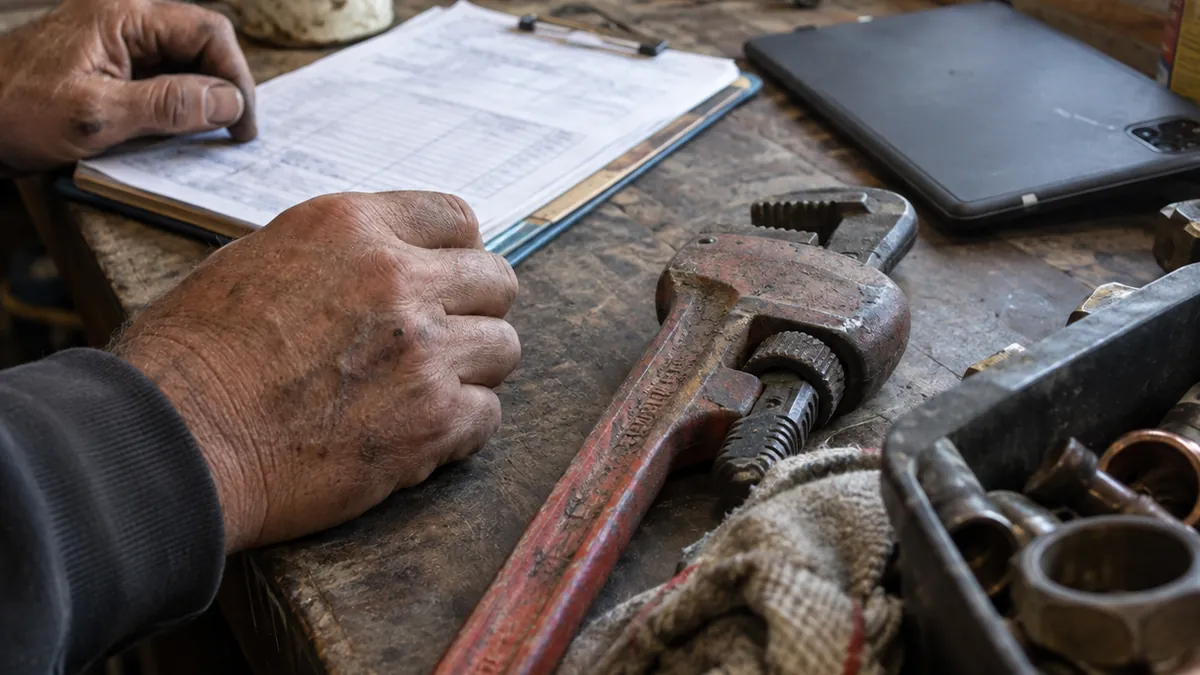
The Cross Connections You Walk Past Every Day
Learn how cross connections, backsiphonage, and backpressure can contaminate potable water, plus what to check during a plumbing walkthrough.
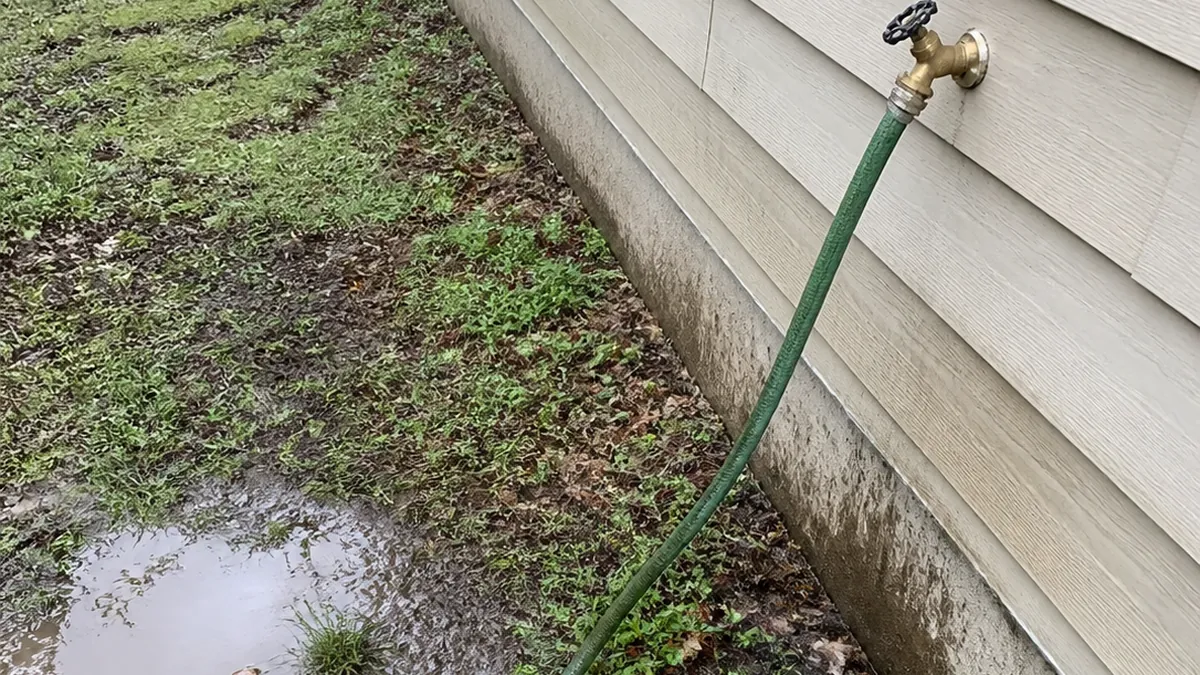
A cross connection is any point where a potable water supply can meet water or another substance that is not potable. Contamination gets back into the clean supply when a pressure differential reverses normal flow, either because backsiphonage draws water backward or because backpressure pushes it backward.
This lands on you because identifying the piping path and explaining the pressure problem requires plumbing judgment that a homeowner may not have.
What is a cross connection in plumbing?
A cross connection is not necessarily a complicated assembly hidden in a mechanical room. It can be an ordinary hose connection, a utility sink setup, or another point where potable water can meet something that should not enter the supply.
The connection creates the pathway. Pressure creates the movement.
That distinction helps when you explain the problem to a customer. A hose lying in a puddle does not mean contaminated water is constantly traveling into the house. It means a pathway exists. If pressure conditions reverse, water can move through that pathway in the wrong direction.
The EPA’s Cross-Connection Control Manual, EPA 816-R-03-002, was published in February 2003. It remains a useful reference for understanding the physics. The EPA says backflow happens because of a pressure differential. Flow moves from the zone of higher pressure to the zone of lower pressure.
That is the practical question on a walkthrough: What can touch the potable supply here, and what would happen if the pressure changed?
This concern belongs in the same broad conversation as material safety. Is That Fitting Actually Lead Free? looks at what is in the water path. Cross-connection control looks at what can enter that path.
What is the difference between backsiphonage and backpressure?
There are two backflow mechanisms: backsiphonage and backpressure.
Backsiphonage occurs when negative or sub-atmospheric pressure in the supply draws water backward. Picture the potable side losing enough pressure that the connected liquid is pulled toward it. The source of concern is not force coming from the downstream side. It is the lower pressure on the supply side.
Backpressure works from the other direction. It occurs when pressure in a downstream system exceeds the pressure of the potable source. The higher downstream pressure pushes water backward.
The EPA manual discusses backpressure in buildings with two or more maintained piping systems. An auxiliary system may be pressurized by a pump or by gas or steam pressure. If that downstream pressure becomes greater than the potable supply pressure and a connection exists, the direction of flow can reverse.
You do not need to turn every customer conversation into a physics lesson. Keep it simple: backsiphonage pulls, and backpressure pushes. Both depend on a pressure difference, and both need a pathway back to the potable system.
The EPA manual says the effect can arise from “a variety of circumstances.” It can “appear in many subtle forms and in unsuspected places,” while a pressure reversal “may be freakish and unpredictable.” That is why a normal-looking setup still deserves attention.
Why is an air gap the benchmark?
An air gap physically separates the potable outlet from the receiving vessel or downstream liquid. The EPA manual describes it as extremely effective against both backsiphonage and backpressure.
The same manual states that “the air gap must be twice the supply pipe diameter but never less than one inch.” That figure comes from the EPA manual. It should not be treated as a substitute for the adopted requirements that apply to your job.
An air gap also has tradeoffs. The EPA says it interrupts piping flow, with a corresponding loss of pressure for later use. That can make it unsuitable where continuous pressurized flow is part of the intended operation.
The manual identifies other drawbacks. The opening exposes water to surrounding air, including bacteria, dust, and other airborne pollutants. Flowing water can create an aspiration effect that draws nearby pollutants into the receiving tank. The EPA also notes that free chlorine can come out of treated water because of the air gap.
So “use an air gap” is not a complete design instruction. You still need to understand the application and follow the requirements that govern it.
The EPA manual is guidance and reference, not the plumbing code you work to. Adopted local code and the water purveyor’s cross-connection control program determine what you must install and test. Check both before selecting a device or promising a solution.
Where do plumbers commonly find cross connections?
Start with the ordinary connections that are easy to ignore.
A garden hose attached to a hose bibb can reach a puddle, container, or other nonpotable source. The EPA manual discusses hose connections as common cross-connection points and illustrates a hose bibb vacuum breaker as a recommended installation. That does not establish what every local program requires, but it shows why hose connections deserve a close look.
A hose bibb feeding a sprayer deserves the same basic question: Can the discharge end contact something that should not return to the potable supply?
At a utility sink, look at where the outlet or attached hose can end up. Do not stop at the presence of a faucet. Trace the possible contact point and consider whether a reversed pressure condition would create a route back.
The useful habit is to follow the water path. Find the potable outlet. Find what it can touch. Then ask whether a pressure difference could move that material backward.
Season matters too. Outdoor hoses and irrigation tie-ins can become more visible when warm-weather calls increase. Where Your Plumbing Calls Actually Come From in Summer gives that seasonal work a wider business context.
Who is responsible for cross-connection control?
Responsibility is shared, and the exact duties depend on local requirements.
The EPA manual says customers, together with other authorities, are responsible for preventing contamination of the private plumbing system under their control and for the associated protection of the public water system.
That does not mean you are legally responsible for every cross connection in every building you enter. It does mean you are well placed to recognize a condition, explain it accurately, and direct the customer toward the applicable requirements.
Document what you observed. Describe the pathway and the pressure mechanism in plain English. Avoid declaring a particular device mandatory until you have checked the adopted code and the water purveyor’s program.
This is also a good boundary for customer education. Explain the risk without overselling it. The condition may be ordinary, but the pathway is real. That same clear approach helps with other water-safety conversations, including Water Heater Temperature: What to Set and What to Tell the Customer.
Frequently asked questions
What causes water to flow backward in a plumbing system? A pressure differential causes it. Water moves from the zone of higher pressure to the zone of lower pressure.
Are backsiphonage and backpressure the same thing? No. Backsiphonage draws water backward when supply pressure becomes negative or sub-atmospheric. Backpressure pushes water backward when downstream pressure exceeds potable supply pressure.
Is a garden hose a cross connection? A hose connection can create a cross-connection pathway when the hose can contact nonpotable water or another substance.
Does an air gap protect against both mechanisms? The EPA manual describes an air gap as extremely effective against both backsiphonage and backpressure, though it also identifies pressure loss and exposure-related drawbacks.
Which backflow device should I install? That depends on the application and governing requirements. Check the adopted local code and the water purveyor’s cross-connection control program.
How often must a backflow assembly be tested? Testing requirements vary by jurisdiction and water purveyor. Confirm the required schedule and qualifications with the authority that governs the property.
The takeaway
Cross connections are easy to miss because they often look ordinary. Find the pathway, identify whether a pressure change could pull or push material backward, and check local requirements before recommending protection.
Bella answers calls your shop misses and texts over the details. See a 10-minute demo.