Water Heater Temperature: What to Set and What to Tell the Customer
Why federal water heater temperature guidance conflicts, how scald and Legionella risks differ, and why plumbers store hot and deliver tempered water.
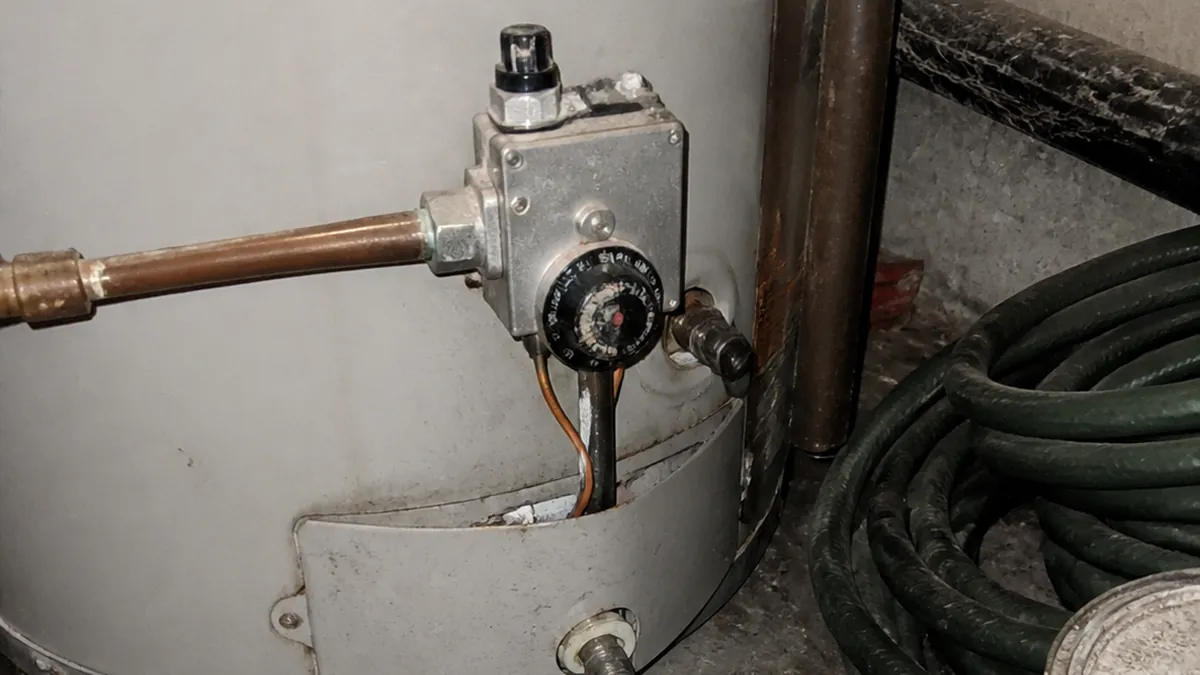
A water heater should store water hot enough to suppress Legionella growth, then deliver tempered water at the tap to reduce scald risk. Federal recommendations appear to conflict because the Consumer Product Safety Commission focuses on preventing burns, while the Environmental Protection Agency focuses on controlling Legionella. The professional resolution is to store hot and deliver tempered, using a thermostatic mixing valve so the tank and the tap are not being asked to maintain the same temperature.
Why do two federal agencies give different temperature recommendations?
The Consumer Product Safety Commission and the Environmental Protection Agency are answering different questions.
The CPSC addresses consumer product injuries. In its guidance on tap water scalds, the agency urges users to lower water heaters to 120 degrees Fahrenheit. The CPSC also says that lowering the setting conserves energy.
The EPA addresses environmental hazards, including conditions that allow Legionella to grow in building water systems. Its guidance discusses higher storage temperatures, lower delivery temperatures, and the role of thermostatic mixing valves.
Neither agency publishes the plumbing code that governs your job. Adopted code and local requirements determine what you must install and set. Those rules can vary by jurisdiction, so you still need to confirm them with the local code authority.
The apparent contradiction disappears once you separate stored temperature from delivered temperature. The tank can be maintained for microbial control while a mixing device limits the temperature reaching a faucet or shower.
Before you quote the work, use The Water Heater Call: What to Get on the Phone Before You Quote to gather the heater type, symptoms, location, and other details that may affect the visit.
What does the CPSC actually say about scald time?
The CPSC guidance on tap water scalds makes the danger concrete.
According to the CPSC, most adults will suffer third-degree burns after exposure to 150 degree water for two seconds. The agency says burns will also occur after six seconds of exposure to 140 degree water or thirty seconds of exposure to 130 degree water.
Those figures explain why temperature at the point of use cannot be treated as an afterthought. At the fixture, exposure is measured in seconds.
The CPSC urges all users to lower their water heaters to 120 degrees Fahrenheit. That guidance directly addresses scald prevention. It does not settle every question about microbial growth throughout a plumbing system.
When you explain this to a customer, keep it simple. Hotter water can cause serious burns faster. Reducing the temperature delivered at a faucet or shower gives the user more protection from that hazard.
What does the EPA actually say about Legionella?
The EPA guidance on Legionella in the indoor environment describes a different temperature problem.
The EPA says Legionella grows best between 80 and 120 degrees Fahrenheit. It also says setting the thermostat at or above 140 degrees Fahrenheit can often keep temperatures above 124 degrees Fahrenheit throughout the plumbing system, helping prevent Legionella growth.
“Can often” matters. It is not a guarantee about every building. System layout, water movement, heat loss, and other site conditions can affect temperatures throughout the piping.
The EPA also recognizes the scald hazard. The agency says hot water at a faucet or shower may present a scalding risk above 117 degrees Fahrenheit. Its guidance therefore contains both sides of the problem: temperatures high enough to discourage growth in the system may be too hot for safe delivery at the fixture.
The EPA notes that typical cold water systems are unlikely to support Legionella growth. It identifies an exception in warm climates where water remains near 80 degrees Fahrenheit for extended periods.
For building water system management, the EPA points readers to ASHRAE Standard 188-2021 and ASHRAE Guideline 12-2020. Those references are especially relevant when a larger facility or recirculating system needs a formal water management plan. They should not be treated as a substitute for checking the adopted local code.
How do plumbers store hot and deliver tempered water?
The trade answer is to stop treating the tank and the tap as one control point.
Store water at a temperature selected for the system’s microbial control needs. Then reduce the delivered temperature at or near the point of use with a thermostatic mixing valve. The EPA describes these valves as devices that mix hot and cold water to provide consistent, safe temperatures and prevent scalding.
Storage temperature addresses conditions inside the heater and distribution system. Delivered temperature addresses the person using the faucet or shower.
The exact installation still depends on the building, equipment, adopted code, and local requirements. A single-family residence is not the same as a large building with recirculation. Do not turn a general federal recommendation into a universal setting for every job.
If you are adding or replacing a valve, Is That Fitting Actually Lead Free? is a useful reminder to verify the products going into potable water work.
What should you explain to the customer?
Start with the two hazards, not a debate over one thermostat number.
Tell the customer that scald prevention concerns the water they touch. Legionella control concerns conditions in stored water and throughout the plumbing system. A properly selected mixing approach separates those goals.
Avoid promising that one setting solves every risk. The CPSC guidance is about reducing scald injuries. The EPA guidance is about conditions related to Legionella growth. Local plumbing rules govern the actual installation.
Document what you found, recommended, and received approval to perform. If the existing system cannot provide appropriate storage and delivery control, explain the practical options in plain English. Identify recirculation, distant fixtures, or a larger facility that may call for a broader water management discussion.
The Water Heater That Waited For October shows why good follow-up matters when a customer is not ready to act during the first call.
What does this mean for your shop?
Your call taker should not tell every customer to turn the thermostat to one universal number. Record the concern and leave the system recommendation to a qualified plumber who can inspect the equipment and installation.
Ask what prompted the call. Is the water unexpectedly hot or not hot enough? Was a heater recently replaced? Is the property a residence or a larger building? Does the system recirculate hot water? These questions help you assign the right technician without diagnosing the system by phone.
Give technicians a consistent explanation: store for system control, temper for delivery, and verify the installation against local requirements.
Your estimate should distinguish between changing a thermostat setting and adding temperature control. If a mixing valve or related piping is needed, make that visible in the proposal.
Frequently asked questions
Should every residential water heater be set to 120 degrees Fahrenheit? No single setting is universally correct. The CPSC urges users to lower water heaters to 120 degrees Fahrenheit for scald prevention, while the EPA discusses higher storage temperatures for Legionella control. Local code and the specific system govern your work.
Why does the EPA discuss a 140 degree Fahrenheit setting? The EPA says a thermostat setting at or above 140 degrees Fahrenheit can often keep the plumbing system above 124 degrees Fahrenheit to prevent Legionella growth. The agency also warns that hot water at the faucet or shower may present a scalding risk above 117 degrees Fahrenheit.
How quickly can hot water cause a serious burn? The CPSC says most adults will suffer third-degree burns from 150 degree water in two seconds. It also lists six seconds at 140 degrees and thirty seconds at 130 degrees.
What does a thermostatic mixing valve do? The EPA describes it as a device that mixes hot and cold water to provide a consistent, safe temperature and prevent scalding. It allows stored and delivered temperatures to be managed separately.
Do federal agency recommendations override plumbing code? No. The CPSC and EPA publish guidance within their respective areas. The adopted plumbing code and local authority determine what you must install and set.
Are larger buildings handled the same way as single-family homes? Not always. Larger buildings and recirculating systems may need a building water management plan. The EPA points to ASHRAE Standard 188-2021 and ASHRAE Guideline 12-2020 as building water management references.
The takeaway
The conflict is not really 120 degrees versus 140 degrees. It is scald prevention versus microbial control, with each federal agency addressing a different hazard.
Your job is to separate storage from delivery, assess the actual system, and follow the code adopted in your jurisdiction. Store hot enough for the system’s control needs, then temper the water delivered to the user.
Bella answers the calls your shop misses and texts over the details. See a 10-minute demo.