What to Charge for a Sewer Camera Inspection (and When to Waive It)
Sewer camera inspection prices online run from about $150 to over $1,000. Here is how to set your own rule before the phone rings, and when to waive it.
There is no single right price for a sewer camera inspection. The real decision is the rule you set before the phone rings.
In call logs, the caller who opens with “how much for a camera?” before describing any symptom is often a buyer in the middle of a home purchase with a closing date, or someone who just had a second backup. A price-only answer treats both the same. They are not the same job. Your intake should ask which one it is before you quote.
Published prices give callers no useful anchor
Consumer cost guides disagree widely. Figures online run from roughly $150 at the low end to well over $1,000 when cleaning, long runs, or hard access are added.
Do not quote one exact average. The caller who searched has already seen a wide range. That number will not tell you what the job costs your shop.
Plumbers’ hourly rates in published guides also vary widely. Price from your own numbers instead. Start with the truck roll, tech time, equipment wear, and report time.
The length of the sewer line affects the price. So does access. A cleanout can make a difference. Cleaning may be needed before the camera can show the line. After-hours timing changes the quote too. A written report and recording are separate parts of the deliverable and belong in the price.
Your trip fee policy should match this same thinking. The truck and technician cost money before the camera enters the line.
A standalone fee pays for the inspection
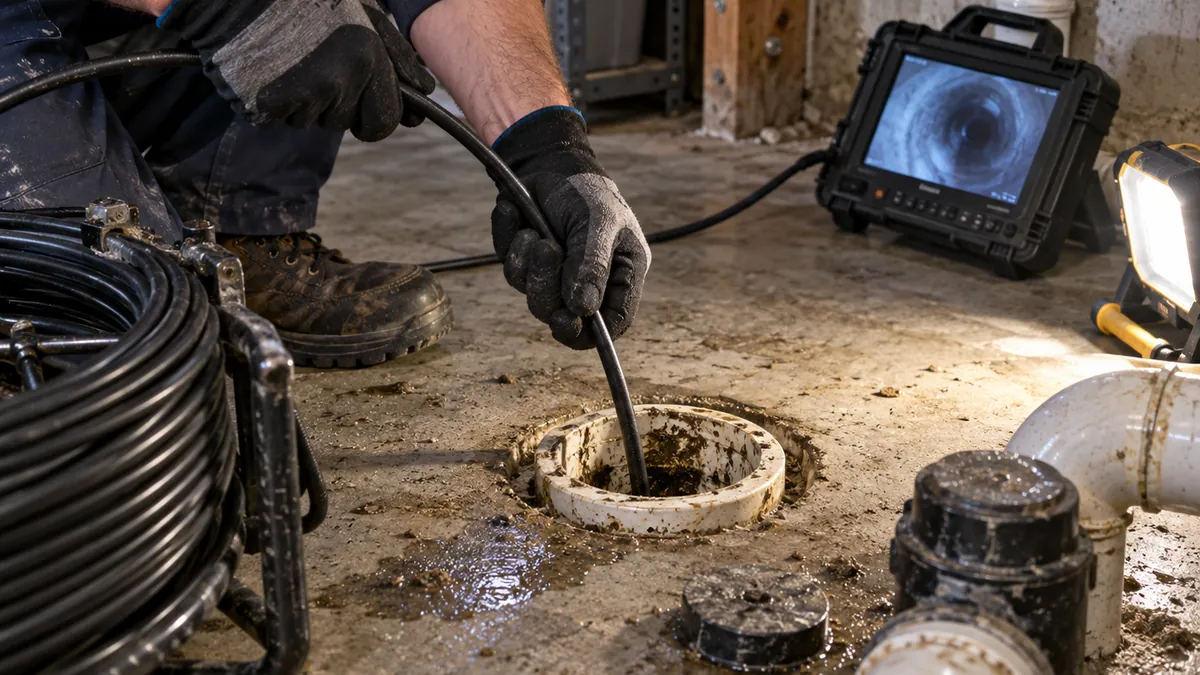
A standalone camera fee pays for the truck roll, technician time, and equipment. It also filters callers who only want a free look.
The trade-off is plain. Some callers will hang up and call the shop that includes the camera. That does not make the standalone fee wrong. It means you need a clear phone answer that tells the caller what the fee buys.
Say what they receive: a live view, a recording, and a note on where the problem is. If you provide a written report, include that in the quote too. Never hand over or promise a recording that you have not priced.
If you use a standalone fee, decide whether it remains separate from later work. Put that rule in your phone answer and your estimate. The caller should not have to guess what happens next.
Including the camera can win the cleaning or repair
Some shops fold the camera into a drain-cleaning or repair quote. Some include it free with a paid cleaning.
This can win the job. The camera may find the real cause, which lets you give a firm repair quote instead of guessing from the symptom. That is useful when the customer has a backup and wants the problem fixed, not just another look. If the camera shows a failed line, it may also lead to a conversation about trenchless sewer repair.
The risk is just as clear. The customer may take the video and walk. You worked for free, including the equipment time and the time needed to explain what the recording shows.
Set the rule before the call. You can always charge. You can credit the inspection toward the repair. Or you can make it free with a paid cleaning. Write the one-sentence answer your staff will use. For help with the broader phone conversation, see how to answer “how much is it going to cost”.
A home buyer needs a separate service
A pre-purchase sewer camera inspection is its own service. Quote it separately from a drain call or repair estimate.
The buyer has a closing date. Speed and a clear deliverable matter more than price in that situation. The service should include a written report and a recording if that is what you promise. State those items before booking the appointment.
Ask whether the caller is buying a home and when closing is. That answer changes the job, the timing, and the information the customer needs. A buyer’s inspection report may lead to another call before closing, so keep the scope clear from the first quote. This inspection report call before closing has its own questions.
Do not treat a home purchase camera inspection as a free add-on to cleaning. There may be no cleaning or repair at all. The inspection and its deliverables are the service.
Ask about the line before you quote it
Your phone script should ask whether there is a backup right now. Ask whether this is for a home purchase. Ask when closing is. Ask where the cleanout is.
Then ask what the caller receives. Your answer should cover the live view, the recording, and the note showing where the problem is. If a written report is part of the job, say so. If it is not included, say that too.
The cleanout question matters because access affects the work. So do the questions about line length, cleaning, timing, and the requested recording. You do not need to promise a price before you know which version of the job the caller wants.
For backup calls, use the intake questions in what to ask when a sewer backs up. For the repair discussion that follows, your flat-rate or hourly policy should already be decided.
Put the rule in writing before the next call
Write one sentence for each service type.
For example, your shop might charge a standalone inspection fee. Or it might credit that fee toward a repair. Or it might include the camera with a paid cleaning. The point is not to copy another shop’s model. The point is to stop making the decision from scratch while a caller is waiting.
Price the recording and report time before you promise either one. Keep the home-purchase inspection as a separate paid service.
Bella, the Plumber Secretary phone secretary, answers these calls around the clock and asks the questions before the price comes up: Is there a backup right now? Is this for a home purchase? When is closing? Where is the cleanout?
The answers land in a text or email call summary, so you quote with the whole story. Plans are Starter at $95 per month, Growth at $295 per month, and Pro at $495 per month. You can hear Bella on the demo page or call the demo line at (669) 284-5564. The shop phone is (707) 620-5284.
Before your next camera call, choose your rule, write the one-sentence answer, and list the recording and report in the quote. Then ask whether it is a live backup, a second backup, or a home purchase before you name the price.