You Can Propose A Change To The Plumbing Code. The Deadline Is January 8.
IAPMO opened the call for proposals for the 2030 Uniform Plumbing Code on July 17, 2026. Anyone can submit, members and non-members. Here is how it works and whether it is worth your time.
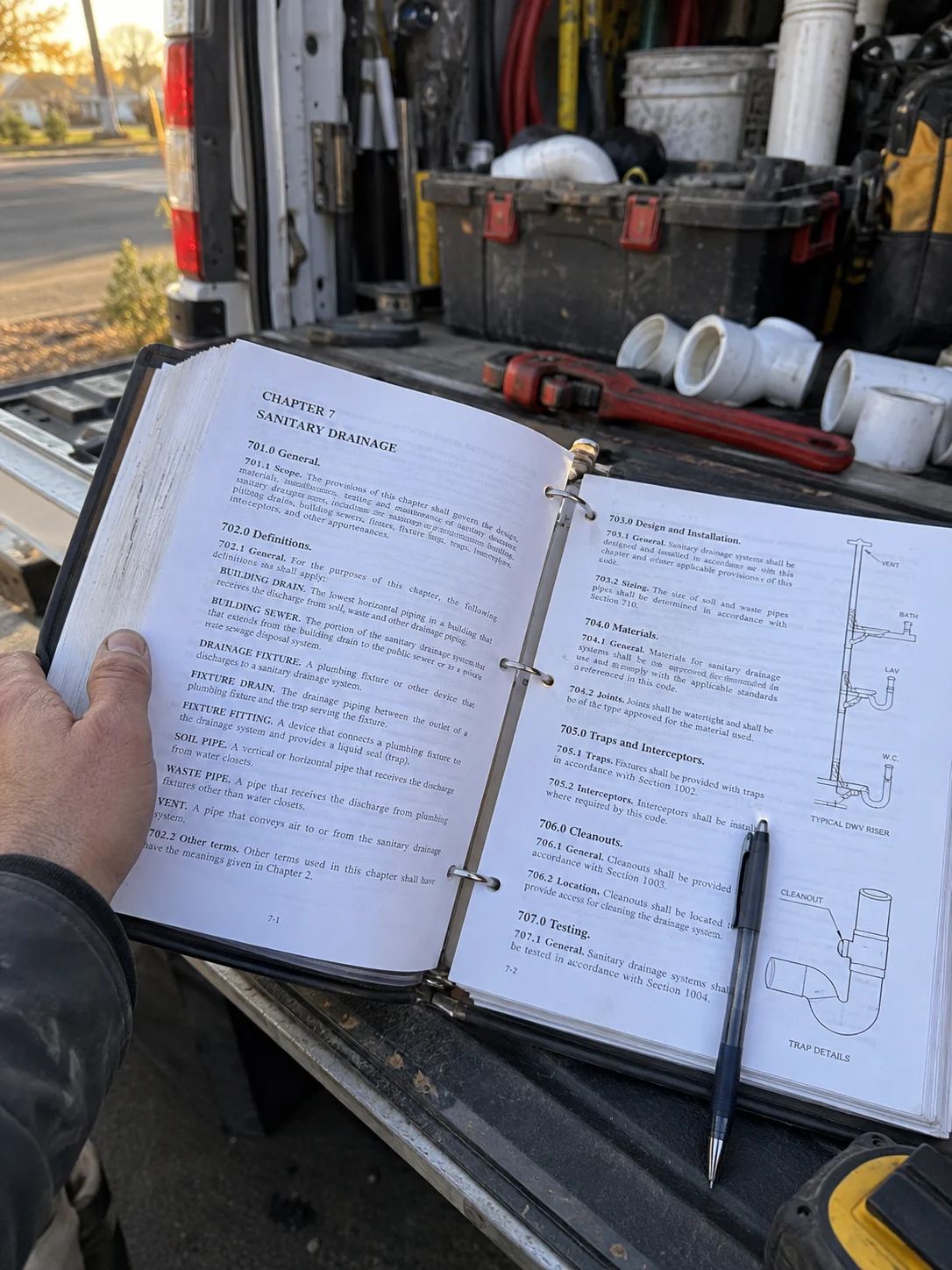
Every plumber has said some version of this out loud, usually standing in a crawlspace: “Whoever wrote this has never actually done the work.”
Here is the part most shop owners never hear. The people who write it will take your suggestion in writing, for free, and they are taking them right now.
On July 17, 2026, IAPMO opened the call for proposals for the 2030 editions of the Uniform Plumbing Code and the Uniform Mechanical Code. The window closes at 5 p.m. PDT on January 8, 2027.
Who actually writes the plumbing code
Not a government agency. This surprises people.
The UPC is a model code developed by IAPMO through what it calls a voluntary consensus process accredited by the American National Standards Institute. A technical committee of people from the trade does the work. Contractors, inspectors, engineers, manufacturers, labor. They meet, they argue, they vote.
The model code only becomes law where a state or city adopts it, which is a separate step that happens on its own schedule. That is why New Jersey only switched to a 2024 code book in August 2026. The code gets written years before anybody has to follow it.
The important part for you is the front of that pipeline. IAPMO’s own position is that anyone, members and non-members alike, can have a voice on proposed changes. You do not need to belong to anything to file one.
What just opened
The codes run on a three-year cycle. The 2030 editions are the ones now open for proposals.
To submit, you create an account on the IAPMO Codes Portal and file there. IAPMO publishes a portal tutorial walking through the mechanics. There is a staff contact listed on the announcement for people who get stuck, which is worth using rather than guessing.
Two requirements matter more than the rest:
Legislative format. You do not write a letter describing what you wish the code said. You show the existing code language with your additions and deletions marked, so the committee can see exactly what would change. If you have ever seen a redlined contract, it is that.
Rationale. You have to explain why. This is the part that decides whether a proposal goes anywhere, and it is the part working plumbers are unusually good at.
What makes a proposal that actually goes somewhere
A committee of trade people is reading these. They are not impressed by strong feelings and they are not moved by “this is dumb.”
What moves them is a specific problem, a specific section, and a fix that does not break something else.
The strongest thing you have is the thing nobody on a committee has as much of: repetition. You have seen the same detail fail on forty houses. You know which requirement gets ignored in the field because it is unbuildable as written, and which one gets satisfied on paper in a way that defeats the point. That is field evidence, and it is exactly what a rationale is supposed to contain.
The weakest proposals are the ones that would make the writer’s own life easier at somebody else’s expense. Committees see those coming. A proposal that reduces work but also reduces protection is going to lose, and it should.
It also helps to know that changes do come through this way. Appendix M, the Water Demand Calculator that is now quietly resizing water supply pipe state by state, got into the code through this same process. Somebody proposed it, a committee fought about it, and now twelve states accept it.
If your state uses the IPC instead
Plenty of the country does not use the UPC at all. If you work under the International Plumbing Code, the January 8 deadline is not yours.
ICC runs its own code development process through a system called cdpACCESS, on its own Group A and Group B cycle. It is also open to the public. The dates are different and they shift, so check ICC’s current code development schedule directly rather than trusting a date you read somewhere, including here.
The principle is the same in both houses. The people writing it are asking, and almost nobody from a two-truck shop answers.
Is this actually worth your time?
Straight answer: for most shops, no, and you should not feel bad about that.
Writing a proposal well is a few hours of careful work, on a code section you would need to read closely first, aimed at a change that will not be law where you work until the early 2030s at the earliest. New Jersey took until 2026 to land on a 2024 book. That is the realistic lag. If you are running service calls and chasing invoices, that afternoon has better uses.
It is worth your time in three situations.
You have one specific, repeated, provable problem. Not a general complaint about the code. One section, one failure you have watched happen over and over. That is a proposal, and it is worth writing.
You are already involved. If you sit on a local board, do inspections, teach apprentices, or belong to an association chapter, you are already reading code closely and you have people to sanity check a draft with. The marginal cost for you is small. This is one of the concrete things that comes with being plugged in, and it belongs in the same column as the other benefits when you are weighing whether an association membership pays for itself.
Something in a new cycle is about to cost you real money. If a change is heading toward your market and you think it is wrong, the proposal window is where that gets addressed. Complaining after adoption is too late by several years.
Outside those three, the useful move is smaller: know that this window exists, know it opens roughly every three years, and pay attention when somebody in your association says a change is coming.
Frequently asked questions
Do I have to be an IAPMO member to submit a proposal? No. IAPMO states that members and non-members alike can participate in the code development process.
What is the deadline? 5 p.m. PDT on January 8, 2027, for the 2030 editions of the UPC and UMC.
How do I submit? Through the IAPMO Codes Portal at codeproposals.iapmo.org. You create an account first. IAPMO publishes a tutorial PDF for the portal.
What format does the proposal need to be in? Legislative format, meaning the existing code text with your proposed additions and deletions marked, plus a written rationale explaining the reason for the change.
When would a 2030 change actually affect my jobs? Only after your state or city adopts the 2030 edition, which is a separate decision on a separate timeline. Adoption commonly runs years behind publication.
What if my state uses the International Plumbing Code? Then this deadline does not apply to you. ICC runs a separate public process through cdpACCESS on its own cycle. Check ICC’s published schedule for current dates.
Does it cost anything to submit? IAPMO’s announcement does not list a submission fee. Confirm with the staff contacts on the announcement before you plan around it.
The takeaway
The plumbing code is not handed down from anywhere. It is written by a committee of people in this trade, in public, on a schedule, and the door is currently open until January 8.
Most shops will not walk through it, and that is a reasonable call. But if you have been saying for years that one particular requirement is wrong, this is the only place that complaint actually counts. Everywhere else it is just something you say in a crawlspace.
Reading code and writing a proposal takes a quiet afternoon. Quiet afternoons are hard to come by when you are the one answering the phone. Bella answers the calls your shop misses, takes the details, and texts them to you. See a 10-minute demo.