Does A Water Heater Need A Double Check Valve? IAPMO Just Answered.
IAPMO's Formal Interpretation FI 006 says a water heater that only makes domestic hot water does not need a double check valve under UPC 603.5.10. A hydronic boiler still does.
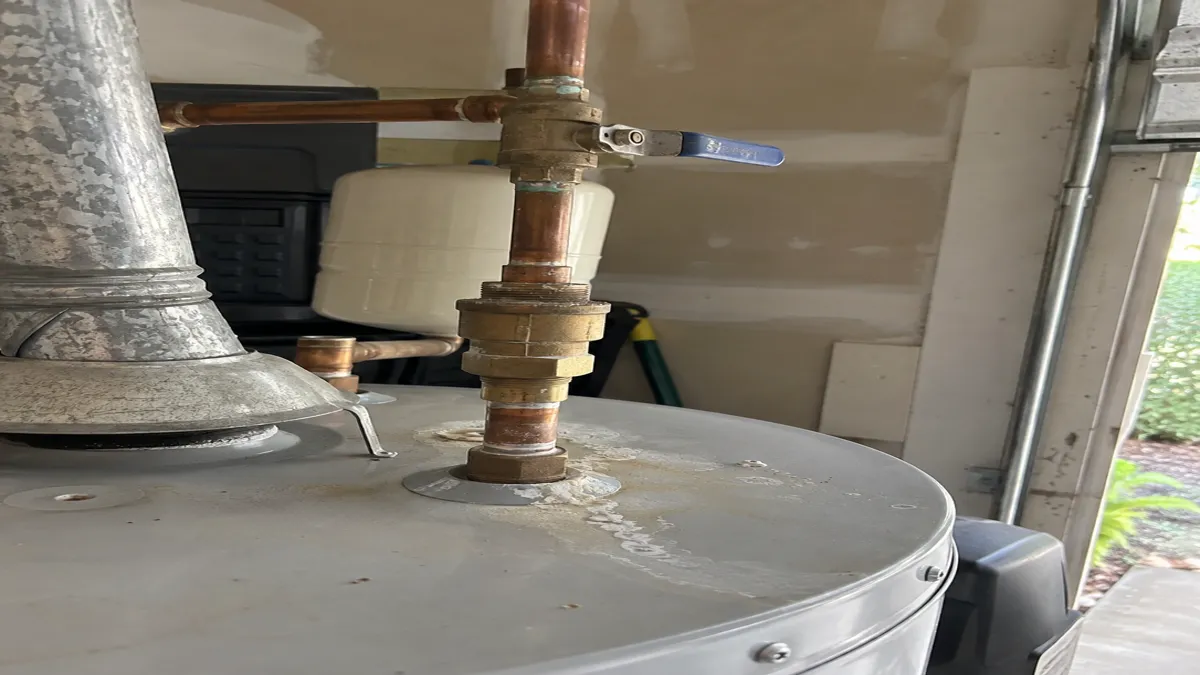
On September 11, 2026, IAPMO said an ordinary water heater that only heats domestic potable water does not need a double check valve under UPC Section 603.5.10. A hot water boiler serving hydronic space heating does.
That answer appears in Formal Interpretation FI 006. The two page letter is signed by Hugo Aguilar, Senior Vice President of Codes and Standards at IAPMO, and addressed to Carlos Flores III of the City of Houston. This question came from a code official, not a manufacturer.
You can read the letter free here. IAPMO also published a September 11 press release.
Section 603.5.10 covers boilers, not ordinary water heaters
UPC Section 603.5.10 is titled “Steam or Hot Water Boilers.” It says potable water connections to steam or hot water boilers must be protected from backflow by one of three methods.
Those choices are a double check valve backflow prevention assembly, a backflow preventer with intermediate atmospheric vent and pressure reducing valve, or a reduced pressure principle backflow prevention assembly in accordance with Table 603.2. Where chemicals enter the system, an RP assembly is required.
The section does not say that a double check valve is the only acceptable method. It also does not make every hot water appliance a boiler.
That wording caused the fight. The interpretation request explained that water heaters typically do not require inlet backflow protection, but Section 603.5.10 could be read to include a water heater used only for domestic potable water. That is how an ordinary heater got pulled into a boiler section.
Backflow protection still matters at actual cross connections you may walk past every day. FI 006 settles one specific question about one UPC section.
IAPMO answered no for water heaters and yes for hydronic boilers
The Plumbing Technical Committee received two questions.
The first asked whether Section 603.5.10 requires a double check valve on a water heater intended only to heat domestic potable water. The answer was no.
The second asked whether Section 603.5.10 applies to hot water boilers in hydronic space heating applications. The answer was yes.
The distinction is the job the appliance performs. A domestic water heater is one thing. A hot water boiler feeding a hydronic space heating system is another.
Combination and dual purpose systems need a closer look. Ask what the appliance actually feeds before you quote. That belongs on your list of questions to ask on a water heater call.
The letter interprets the UPC, not every local code
FI 006 is an interpretation of the Uniform Plumbing Code. It is not an interpretation of the International Plumbing Code, and it does not automatically become law in your town. Check which code and local amendments your state or city adopted.
A formal interpretation explains existing text. It does not rewrite Section 603.5.10 or replace anything printed in the code book.
Under Section 6-4.2 of IAPMO’s Regulations Governing Committee Projects, the answer applies to the 2021, 2024, and 2027 UPC editions. It is not limited to shops using the 2027 Uniform Plumbing Code.
Local amendments, the water purveyor, and the authority having jurisdiction can still require more than the model code. Do not pull out an installed backflow device based only on this letter.
Do not mix this ruling up with thermal expansion control either. A check valve or backflow device on the inlet creates a closed system. Thermal expansion in that closed system is a separate problem with a separate solution.
Put the two page letter in every truck
Save the PDF on your phone. Print a copy for each truck. A letter on IAPMO letterhead will settle a rough-in discussion faster than telling an inspector, “That is not how I read it.”
Have that discussion before the inspection. You can be right and still lose a trip when the disagreement starts after the inspector arrives.
Check your standard water heater bid too. If you carry a double check valve as a line item just in case, price the work both ways. Then check what that item costs your shop across a year of heater swaps.
The interpretation was balloted through IAPMO’s Plumbing Technical Committee. It received the required simple majority and three-fourths majority agreement on both questions under Section 6-3.4 of the governing regulations. One code official in Houston submitted the request, and the result now applies to three UPC editions. Anyone can submit a question or propose a plumbing code change.
Frequently asked questions
Is this ruling required where I work?
Only if the UPC applies in your jurisdiction, subject to local amendments and other local requirements. Ask your authority having jurisdiction before the job.
Does FI 006 change the code text?
No. It clarifies what existing Section 603.5.10 means. Nothing in the code book was rewritten.
What about a combination heater that also serves space heating?
Do not treat it automatically as a domestic water heater. Find out what the appliance feeds. Section 603.5.10 applies to hot water boilers in hydronic space heating applications.
When does the interpretation take effect?
The stated effective date is October 1, 2026, which is 20 days after the letter date, unless an appeal is filed with the IAPMO Standards Council under Section 1-6.
Can someone still appeal it?
Yes. The appeal deadline is October 9, 2026.
Should I remove a double check valve already installed?
No. FI 006 does not declare a particular existing installation wrong. Local amendments, the water purveyor, or the authority having jurisdiction may still require that protection.
The takeaway
Stop adding a double check valve to every domestic water heater solely because Section 603.5.10 says “hot water boilers.” Keep FI 006 in the truck, confirm the adopted code before bidding, and ask what the appliance feeds. Talk to the inspector before inspection day, not after you have paid for the trip.
Reading code letters is a fine use of a slow afternoon and a bad use of a Tuesday when the phone will not stop, so Bella answers the calls your shop misses and texts you the details. See a 10-minute demo.