Should Your Shop Start a Registered Apprenticeship?
Learn what a registered plumbing apprenticeship requires, how federal standards work, and whether the commitment makes sense for your small shop.
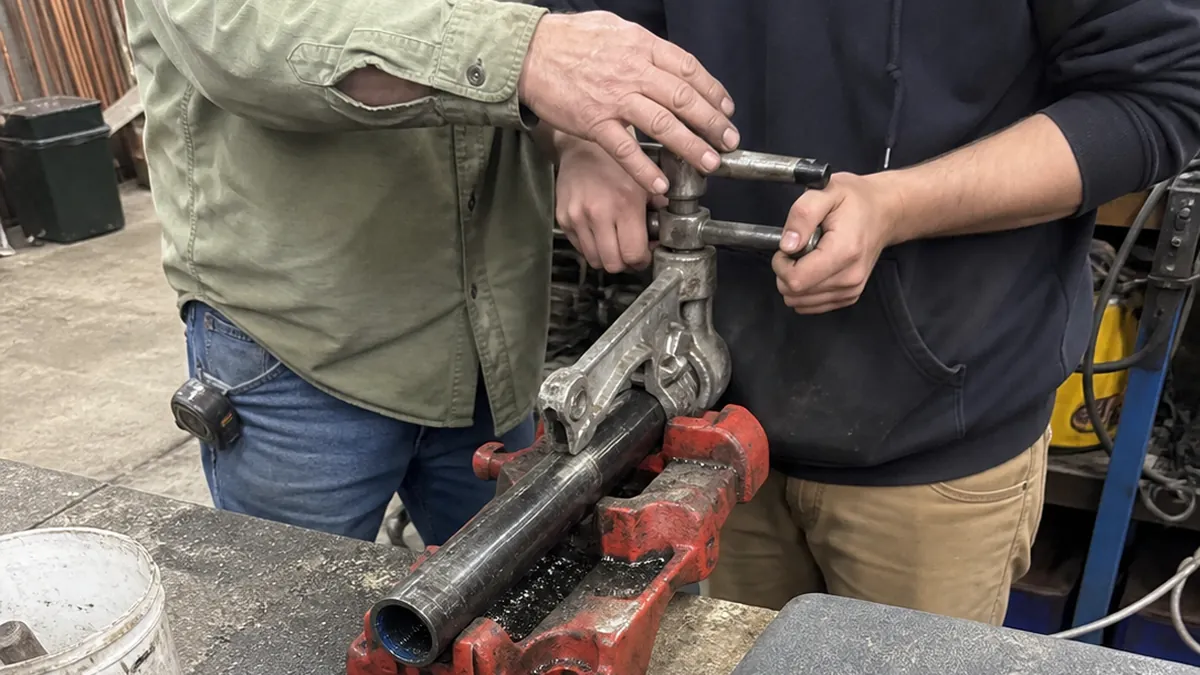
A registered apprenticeship is a formal training program registered with the U.S. Department of Labor or a State Apprenticeship Agency. Your shop provides a paid job, progressive wages, structured learning under an experienced mentor, related technical instruction, and a path to a nationally recognized credential. It requires consistent supervision, instruction, recordkeeping, and a real commitment of time from someone who knows the trade.
That matters when you cannot hire your way out of the labor problem and need to build skilled plumbers instead.
What is a registered apprenticeship?
A registered apprenticeship is more than hiring a helper and teaching that person as jobs come up. It is a structured employment and training program that meets federal or state registration standards.
The U.S. Department of Labor’s Registered Apprenticeship guidance identifies five core components. The program is industry led. The apprentice has a paid job and earns progressive wages as skills and productivity increase. The apprentice receives structured learning on the job, including instruction from an experienced mentor. The program includes related classroom education based on the employer’s training needs. At completion, the apprentice earns a portable, nationally recognized credential.
For your shop, the biggest difference is consistency. You define what the apprentice must learn, document progress, and coordinate the related instruction.
Registration can run through the U.S. Department of Labor or a State Apprenticeship Agency. The right contact depends on your state and the registration system operating there.
This is also different from state plumbing licensure. Completing a registered apprenticeship does not, by itself, give someone a plumbing license. Your state licensing board sets the requirements for legally performing licensed plumbing work. Check those rules before designing jobs, supervision, or a training path.
What do the federal apprenticeship standards require?
The federal standards at 29 CFR part 29 require a program to spell out the work processes apprentices will learn, how progress will be measured, how wages will advance, and how related technical instruction will be provided.
The shop must supply access to experienced supervision. The mentor needs to demonstrate work, observe the apprentice, correct mistakes, and confirm that skills are developing.
That time has a cost. Time spent explaining a diagnosis or watching an apprentice make a connection is time the mentor is not using at full production. Your schedule and pricing need enough room for teaching.
The apprentice is also an employee in a paid job. This is not unpaid observation. Progressive wages are part of the model, with pay increasing as skills and productivity grow.
If finding candidates is your immediate concern, start with Why It’s Getting Harder to Hire a Plumber, and What That Means for Your Shop. A registered apprenticeship can create a pipeline, but it will not solve an empty dispatch board this quarter.
Does every apprenticeship require 2,000 hours?
No. The federal standards at 29 CFR 29.5(b)(2) allow the term for an individual apprentice to be measured in three ways.
Under the time-based approach, the apprentice completes the industry standard for on-the-job learning, stated in the federal regulation as “at least 2,000 hours.”
Under the competency-based approach, progress depends on demonstrating the required skills rather than reaching a universal hour total.
Under the hybrid approach, the program combines time requirements with demonstrated competency.
This distinction is important. The U.S. Department of Labor does not say every registered apprenticeship must use the same 2,000-hour term. That figure belongs to the time-based approach. Your program still needs an approved method for measuring completion, but federal standards provide more than one method.
The choice affects how you track progress. A time-based program needs reliable records of on-the-job learning. A competency-based program needs clear skill standards and a defensible way to evaluate performance. A hybrid program needs both.
Are 144 classroom hours required every year?
The federal regulation at 29 CFR 29.5(b)(4) requires organized, related instruction in technical subjects connected to the occupation. It says, “A minimum of 144 hours for each year of apprenticeship is recommended.”
The key word is “recommended.” Federal regulation does not describe 144 hours as a universal annual mandate. It does require the program to provide related instruction.
The same federal paragraph says that instruction may be delivered through means such as classroom instruction, occupational or industry courses, and similar media. The delivery plan should fit the occupation, the registered standards, and the employer’s training needs.
A small shop does not necessarily have to build every lesson alone. An industry association or other training provider may help you understand available instruction options. Is PHCC Membership Worth It for a Small Plumbing Shop? can help you think through the broader value of trade association support.
What does an apprenticeship cost a small plumbing shop?
There is no honest universal price tag. Your costs depend on wages, the training structure, the source of related instruction, administration, and mentor capacity.
Early tasks may take longer, work may need closer inspection, and some calls will not suit a new apprentice. Someone must also track progress, manage wage advancement, communicate with the registration body, and coordinate related instruction.
Because apprentices are learning, your processes must catch errors before they become callbacks, damage, or safety problems. Clear checklists and required inspections can protect the customer while supporting the apprentice.
Do not build the plan around an assumed grant, tax credit, or state payment. Availability and eligibility can vary. Verify any funding directly with the relevant government body before including it in your budget.
Is an apprenticeship worth it for a two or three truck shop?
It can be, but only if you have enough stability to train someone well.
Your shop needs a qualified person who can teach consistently and a schedule that can absorb slower work. Federal standards at 29 CFR 29.5(b)(7) also require a numeric ratio of apprentices to journeyworkers consistent with proper supervision, training, safety, and continuity of employment.
An apprentice needs exposure to the right work processes, not just months of carrying materials and cleaning trucks. Your jobs should offer enough variety for structured development.
The business must also support another paid employee through the learning period. If you are deciding whether demand supports another crew member, read When Is a One-Truck Plumbing Business Ready for a Second Service Truck?.
A registered apprenticeship makes sense when you want to develop talent and can operate a real training program. It is a poor fit if you need an immediately independent plumber or have no room for supervision.
Frequently asked questions
Do I need a registered apprenticeship to hire a helper? No. A registered apprenticeship is not required simply to employ a helper. Follow the employment, supervision, and plumbing rules that apply in your state.
Does every registered apprentice need 2,000 hours? No. The federal standards at 29 CFR 29.5(b)(2) allow time-based, competency-based, and hybrid approaches. The “at least 2,000 hours” language applies to the time-based approach.
Are 144 hours of classroom instruction legally required each year? The federal standards require organized, related technical instruction. At 29 CFR 29.5(b)(4), the U.S. Department of Labor says a minimum of 144 hours for each year is recommended, not universally required.
Who can register an apprenticeship program? Programs are registered with the U.S. Department of Labor or a State Apprenticeship Agency, depending on the applicable system.
Does completing the program make the apprentice a licensed plumber? Not automatically. Registration and state plumbing licensure are separate. Your state licensing board determines the requirements for a plumbing license.
Can the shop owner serve as the mentor? The shop must provide experienced mentorship. An owner may fill that role if qualified, but should plan for the production time that teaching and evaluation will consume.
The phone problem an apprenticeship creates
There’s a tradeoff shops running a mentor program run into that doesn’t show up in the federal standards: the mentor is usually your most experienced plumber, which makes him the one whose hands are busiest teaching instead of holding a phone. A ringing job site during a training window is exactly the kind of interruption that either breaks the lesson or loses the call.
Bella’s call summaries go out by text or email as calls happen, so the mentor isn’t the one deciding between finishing a demonstration and answering a phone. He reads what came in on a break instead of during it.
The takeaway
A registered apprenticeship gives your shop a formal way to build skilled labor through paid work, progressive wages, mentorship, related instruction, and measured development. It is not a quick hiring fix, and it is not right for every contractor. Before registering, confirm your state’s licensing rules, talk with the appropriate apprenticeship agency, and decide whether your shop can protect the mentor time required to train someone properly.
Bella answers calls your shop misses and texts over the details. See a 10-minute demo.