The Lead Pipe Rule Water Utilities Say They Can't Meet
AWWA says EPA's 2037 lead pipe deadline is unrealistic. EPA's defenders disagree. Here is where the court case stands and what it means for your shop.
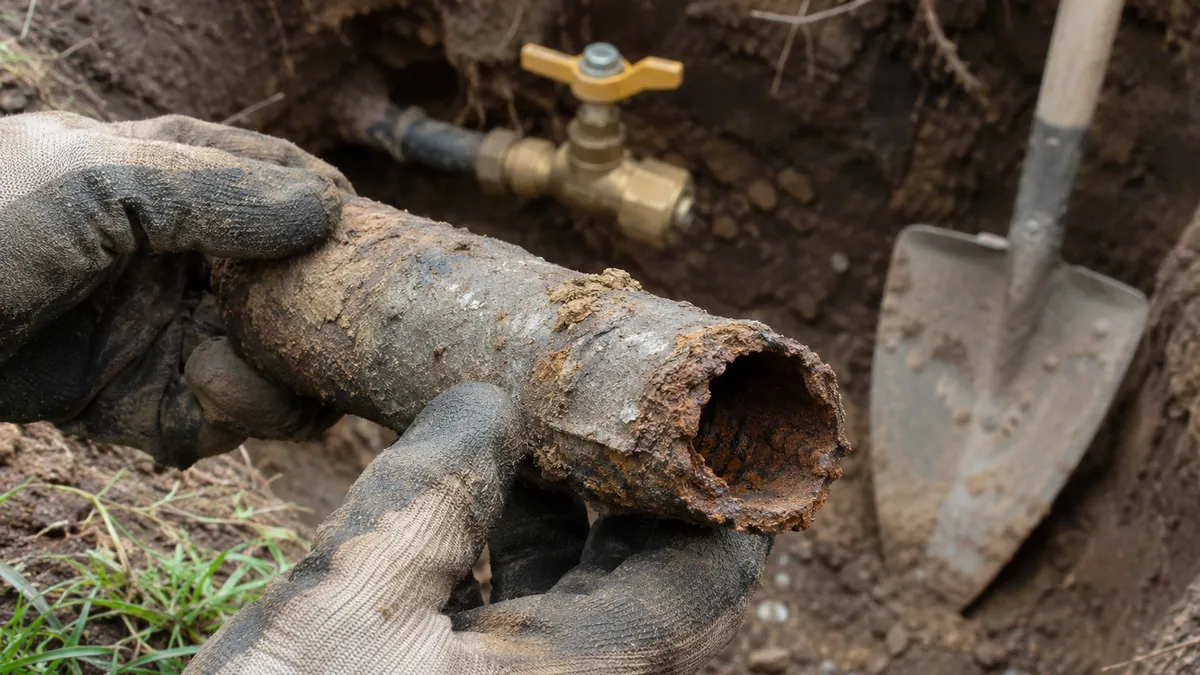
The fight is over whether water utilities can replace every lead service line by December 31, 2037. The American Water Works Association says the deadline, the cost estimate, and one legal theory do not hold up. EPA and the groups defending the rule say lead lines are the largest source of lead in drinking water and the schedule is feasible. The D.C. Circuit has the case, and its answer on the word “control” could decide who handles the pipe on your customer’s side of the meter.
If you own a plumbing shop, this affects the work utilities may bid, the quotes homeowners may request, and the calls that reach your phone after business hours.
The rule puts November 1, 2027 on the calendar
EPA published the Lead and Copper Rule Improvements in the Federal Register on October 30, 2024. The compliance date is November 1, 2027. The published rule sets the replacement requirement.
Water systems must replace lead service lines and certain other service lines that can release lead particles. The work must happen at the fastest feasible rate.
For most systems, the default timeline is ten program years. EPA’s guidance lists the deadline for most systems as December 31, 2037. Some systems can qualify for a deferred deadline. A state can also set a shorter deadline.
The rule also requires replacement plans and a baseline inventory by November 1, 2027. Those dates remain on the books unless the court changes the rule.
AWWA says the 2037 deadline cannot be met
The American Water Works Association filed its petition for review in December 2024. The case is American Water Works Association v. EPA, No. 24-1376, in the U.S. Court of Appeals for the D.C. Circuit.
AWWA says it supports removing all lead service lines. Its objection is to the timeline, the cost, and one legal point.
In a statement dated September 15, 2025, AWWA called replacing all lead service lines by 2037 “not realistic.” It points to what it calls the “logistical, labor, supply chain, and technical realities” of full removal. Its position is that a ten-year window is implausible for the amount of work involved.
AWWA also says EPA “dramatically underestimates” the nationwide cost. AWWA says replacing each lead service line could average more than $12,000. Applied to EPA’s estimate of about 9.2 million lines, AWWA projects total costs above $100 billion.
The legal dispute turns on the word “control.” AWWA says, “Under the Safe Drinking Water Act, access does not equal control.” Its argument is that the rule treats a utility’s access to a line as control over that line, even when part of the line sits on private property.
AWWA wants the court to send the rule back to EPA for a revised final regulation. Its petition FAQ lays out that position.
EPA’s defenders say the rule fits the statute
EPA and the groups defending the rule take the opposite view. In a brief filed April 17, 2026, the Natural Resources Defense Council, Sierra Club, and Newburgh Clean Water Project argue that lead service lines are “typically the most significant source of lead in water.” They say no party contests that point.
They also argue that the Safe Drinking Water Act requires EPA to prevent known or anticipated health effects “to the extent feasible.” In their view, the default ten-year timeline is a well-justified improvement over prior rules.
Their reading of “control” is different from AWWA’s. They point to the statute’s definition of a public water system, which includes “distribution facilities under control of the operator.” They argue that treating control as access is the best reading of the statute. They also say AWWA’s ownership-based reading would produce absurd results.
The defenders point to AWWA’s own 2017 endorsement of full lead line removal. They also cite EPA’s analysis, which puts annualized costs at about $1.5 billion to $2 billion and annualized monetized benefits at about $13.5 billion to $25.1 billion. Those are EPA’s figures, as cited in the brief.
A group of states and D.C. back EPA, and the U.S. Chamber of Commerce backs AWWA.
The D.C. Circuit has heard argument, but the rule still stands
The D.C. Circuit heard oral argument on September 30, according to a report from the Association of Metropolitan Water Agencies. AMWA reported that the argument focused mainly on what “control” means under the Safe Drinking Water Act and how far EPA’s authority goes.
As far as we found, the court has not issued a decision. A ruling could land at any time. Check the case before relying on any date, deadline, or assumption about who must perform the work.
The court’s answer will affect more than a legal brief. It will decide how the private-side piece of a service line gets handled. Under the rule’s reading, utilities replace the full line. Under AWWA’s reading, the private-side piece may fall to the homeowner.
That means different quotes and different customers calling your shop.
Prepare for utility bids and homeowner questions now
Utilities that need contractors will bid the work. Ask your own utility what its replacement plan is and whether it will use outside contractors. If you are considering that market, read about bidding on lead service line replacement work.
Do not change your lead-free fitting practices based on this case. Lead-free fitting compliance on every job is unchanged. Keep following the lead-free fitting rules.
Expect homeowners to receive letters from utilities about their service line material. Some will call after hours or on a weekend, once they finally read the letter. The caller is not dealing with an emergency. They want someone to tell them what to do next. Those calls often arrive when nobody is in the office.
Bella answers your shop’s phone around the clock, takes the caller’s name, address, and problem, books the job into your schedule, and follows up. Plans are Starter at $95 per month, Growth at $295, and Pro at $495. You can hear Bella answer a call at (669) 284-5564.
For now, keep November 1, 2027 on your calendar, ask your utility about contractor plans, and check the court before quoting a customer based on who must pay for the private-side line. Use the same habit with other disputed rules, like the Bay Area gas water heater fight.