Plumber Labor Warranty: Why One Year May Not Be Enough
How long should a plumber warranty their work? One year is common, but Minnesota law gives some plumbing installs two. How to set and word yours.
TL;DR: One year is common practice for a plumbing labor warranty, but Minnesota gives homeowners a two-year warranty for certain plumbing installation defects caused by noncompliance with building standards. Print your labor warranty, exclusions, and callback instructions on every invoice.
One year is the common answer on plumbing marketing pages and forum posts. It is not a national rule. Some shops use two years for larger jobs, such as water heater installs or whole-house repipes.
Warranty calls tend to sound alike on a shop’s call log. A customer says, “you were just here,” and cannot remember whether the invoice said anything about a warranty. Shops that print the terms on the invoice answer that question in one sentence.
Minnesota already gives some plumbing installs a two-year warranty
Minnesota Statutes section 327A.02, subdivision 3, says a home improvement contractor warrants plumbing, electrical, heating, and cooling installations for two years after the warranty date when defects result from faulty installation caused by noncompliance with building standards.
Under section 327A.01, the warranty date is the date the home improvement work was completed.
That rule is limited. It covers defects tied to noncompliance with building standards. It does not mean every plumbing problem is covered for two years.
Minnesota also uses a one-year period for other home improvement work that does not involve major structural changes, when the defect involves faulty workmanship or defective materials caused by noncompliance with building standards. You can read the statute on the Minnesota Revisor of Statutes.
Minnesota is one state’s example. Other states differ. Some use statutes of repose or implied warranties of workmanlike performance instead of a set labor warranty. Check your state’s contractor law or licensing board. A local attorney can explain how the rule applies to your work.
Put your warranty on the invoice before the customer asks
Most shops have a default warranty period in their heads. The customer cannot see it unless the invoice says it.
Put the duration and scope of your labor warranty on the invoice or work order. Do it before the customer has to call and ask. If your estimate needs clearer terms before the work starts, see what an estimate needs before the customer says yes.
Pick one default labor period for each job type. You might choose one period for repairs and a longer period for full installs. The numbers are yours to choose, subject to your state’s rules and any warranty you already promised.
The important part is consistency. Your dispatcher, technician, and invoice should give the customer the same answer.
State exactly what your labor warranty covers
A labor warranty should name the work you performed. It might cover your workmanship and the fittings your shop supplied and installed.
It should also list exclusions. A different failure elsewhere in the system is not the same thing as a defect in your work. Parts supplied by the customer need separate wording. Damage from freezing or misuse needs to be addressed. A failure covered by the manufacturer’s warranty may not be your labor warranty.
A simple invoice can say that customer-supplied parts receive labor coverage only, if that is your policy. Put that statement in writing before the job is complete. For more on that situation, see when the customer already bought the part.
Do not make the customer guess which warranty applies. Your labor warranty covers the install. The product warranty covers the product under the manufacturer’s terms.
The water heater warranty may not cover your return trip
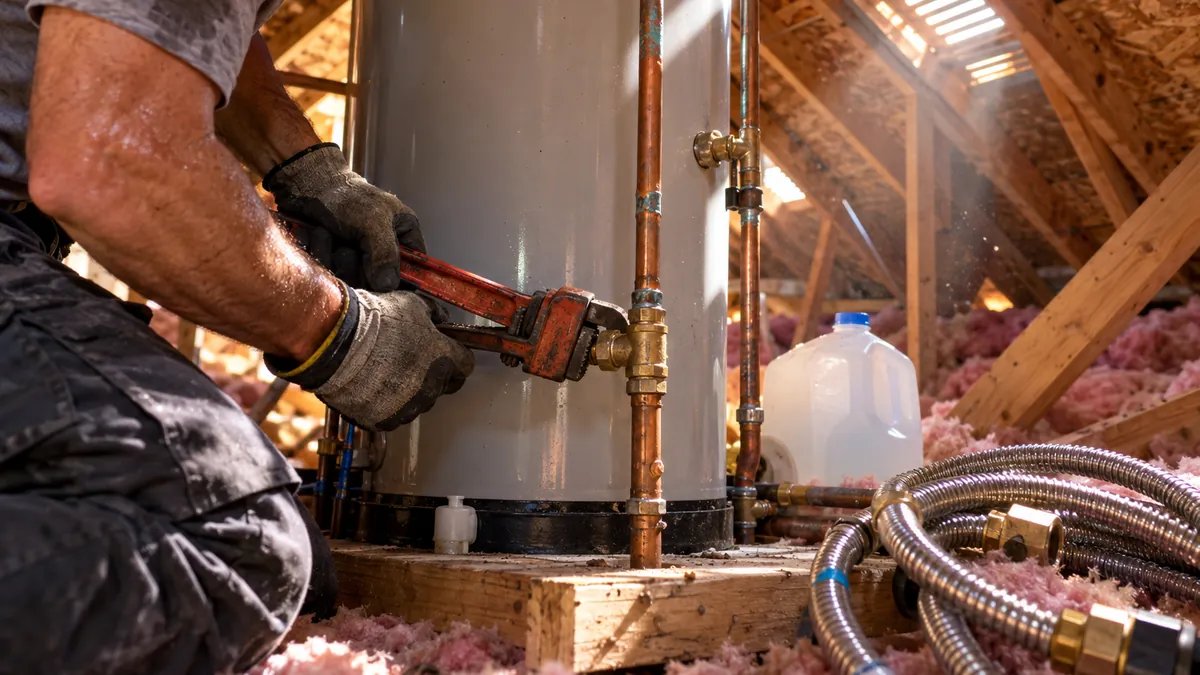
Many water heater warranties give the tank several years of coverage. Labor, shipping, and reinstallation are often excluded or limited to a short period, such as the first year.
That is not a universal rule. Read the certificate for the specific unit before you explain coverage to the customer. The manufacturer’s paperwork and your labor warranty are two different documents.
Customers mix them up. A tank can have product coverage while your labor warranty has a different duration. The customer may still call your shop first because you installed it.
Before quoting a water heater, ask the questions in what to ask on a water heater call. Then keep the unit’s warranty certificate with the job record.
A warranty policy needs a callback plan
Your invoice should tell the customer who to call and how to reach you. Use the shop’s number. A warranty call should reach the shop instead of disappearing into a technician’s personal phone.
Decide in advance what happens after the call. Decide who goes, how fast the shop responds, and what information the dispatcher collects. Keep the response time short.
The callback policy matters because the phrase “it is doing it again” does not tell you whether the problem is your workmanship, a failed part, a separate system issue, or customer damage. The questions and next actions are covered in handling the “it’s doing it again” call.
Bella answers every call around the clock. When a caller says the repair is failing again, Bella treats it as a priority callback and flags it to the owner. Bella recognizes the customer’s number and recent visit from customer memory, so the call does not start cold.
The Starter plan is $95 per month and includes basic memory. Growth is $295 per month and includes full long-term customer memory. Pro is $495 per month. You can see Bella handle a call or call the demo line at (669) 284-5564.
Print the terms before the next job closes
Choose your default labor period for each job type. Check your state’s rules. Read the manufacturer’s certificate for each water heater or other covered product.
Then add the warranty duration, covered work, exclusions, customer-supplied parts rule, shop phone number, and callback process to your invoice or work order. Use the same wording on every job of that type.
If you also need clearer payment terms, see getting paid: deposits, terms and late invoices. The next time a customer says, “you were just here,” your invoice should answer what happens next.