The Water Heater Call: What to Get on the Phone Before You Quote
'No hot water' could be a $200 fix or a $2,000 replacement. Here's what to nail down on the phone so you roll the truck with the right parts and the right price.
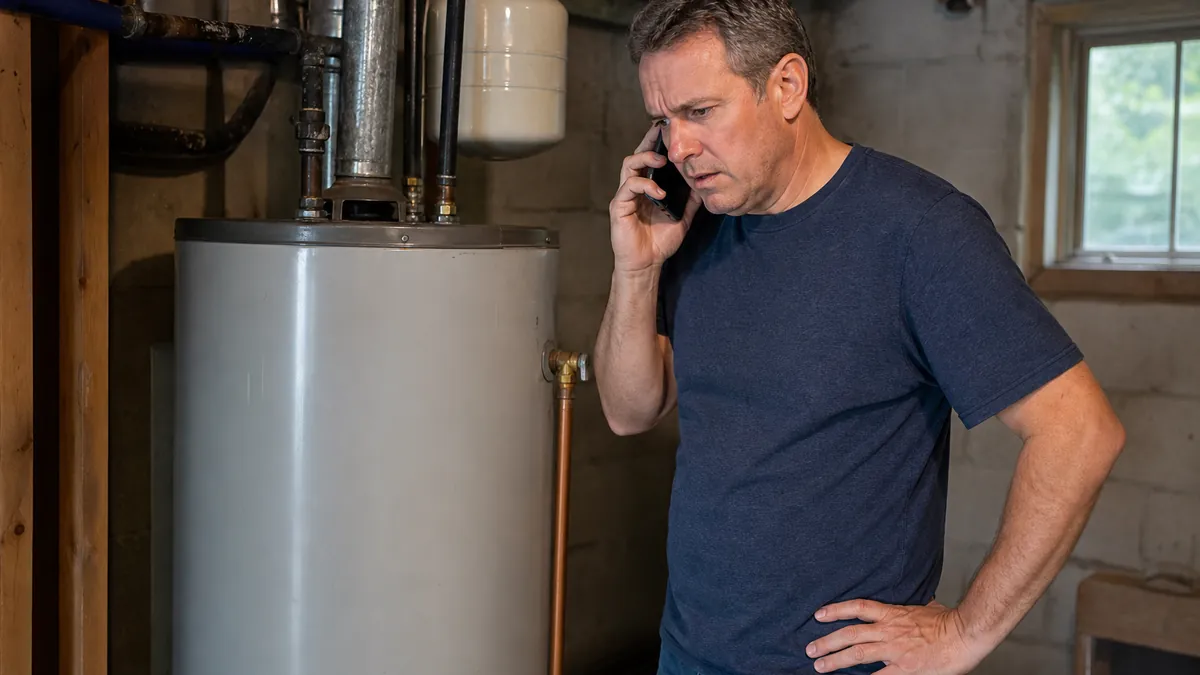
“My water heater’s out.” It’s one of the most common calls a plumbing shop gets, and it’s also one of the most useless on its own. Behind those four words is anything from a tripped pilot light you’d relight in five minutes to a leaking forty-gallon tank that needs full replacement. Same opening sentence, ten-times difference in the job.
If you roll the truck on “no hot water” without learning more, you’re gambling: wrong parts, wrong time estimate, wrong price in your head. A few questions on the phone turn that gamble into a job you show up ready for.
”No hot water” is five different jobs
The same complaint can mean a pilot light or thermocouple, a failed heating element, a bad gas valve or thermostat, sediment buildup, or a tank that’s rusted through and leaking. One is a quick service call. Another is a two-hour replacement with a new unit on the truck. You can’t tell which from the phrase alone, but you can tell from a handful of questions.
The questions that scope a water heater on the phone
You don’t need a master plumber on the line to get these. You need someone who knows to ask:
- Gas or electric? Completely different failure points and parts.
- Tank or tankless? Different units, different diagnostics, different price entirely.
- Leaking, or just no heat? Water on the floor usually means replacement and some urgency. No heat with a dry tank is often a repair.
- How old is it? A unit past ten or twelve years is a replace-not-repair conversation before you even arrive.
- What size / how many people in the house? Tells you what replacement unit to bring if it comes to that.
- Where is it, and can you get to it? Basement, garage, attic, a closet behind a stack of boxes. It changes the job and the time.
Capture those and you arrive with the right unit or the right parts, and a price range that holds up.
Why it matters before you roll
Get this on the call and you skip the most expensive thing in the trade: the wasted trip. No “I’ll have to come back with the right heater,” no surprise scope on the doorstep, no quote you have to walk back. It’s the same discipline as any good intake call, just aimed at the questions a water heater actually turns on. A sewer backup turns on a different set of questions, but the habit is identical.
And it lets you handle the inevitable “so how much will it cost?” like a pro: not a blind number, but an honest range based on what you just learned, plus a booked visit to confirm.
The catch is that water heaters don’t wait for business hours to quit, and “no hot water” with a family at home feels urgent. Bella asks this exact set of questions on every water heater call, day or night, and texts you a clean dispatch ticket (gas or electric, tank or tankless, age, leak or no, access) so you roll out prepared instead of guessing.
The takeaway
“No hot water” is the start of the conversation, not the job. Six quick questions on the phone tell you whether you’re bringing a thermocouple or a whole new tank, and that’s the difference between a clean one-trip job and an expensive guess.