When The Customer Already Bought The Part
A customer bought the faucet or water heater themselves and wants labor only. Three workable policies, the warranty exposure, and what to ask before a truck rolls.
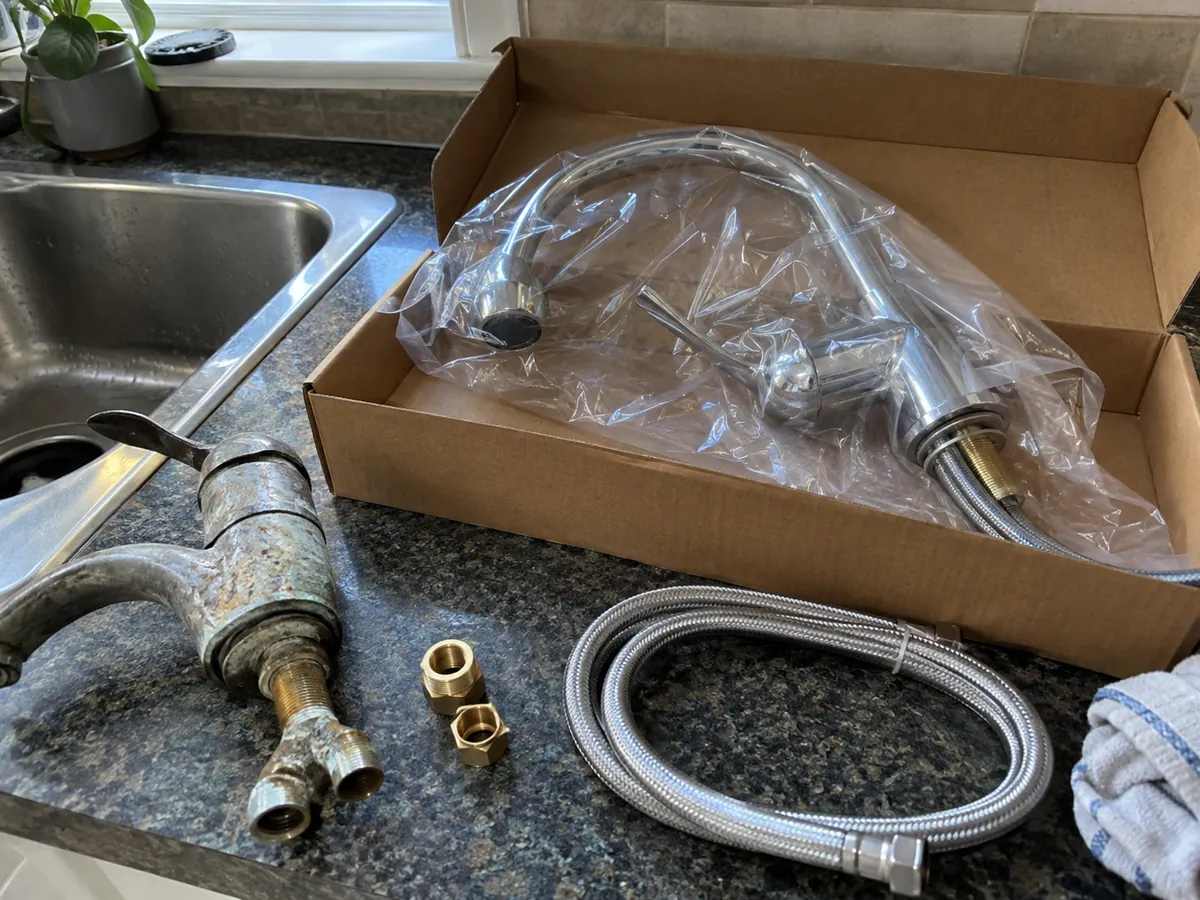
“Can you just install it?”
The customer already has the faucet in a box. Or the cartridge. Or a water heater sitting in the garage since the weekend. They bought it themselves, they want labor only, and they want your truck to finish what they started.
Listen for the word “just.” These callers almost always lead with it, and it is doing a lot of work in that sentence. It means the hard part is over and you are being asked for the easy remainder. That is rarely what is actually being asked.
This call needs a policy, not a gut decision.
If you decide it fresh every time, the answer depends on who picked up the phone, how full the schedule looked that morning, and how convincing the customer sounded. One caller gets a yes, the next gets a no, your tech shows up without the same information either time, and the price gets invented at the door.
Decide your position before the next one comes in. Then screen for it before a truck rolls.
The box does not tell you what you need to know
A customer-bought part may be perfectly good. It may also be a grey market listing, a counterfeit cartridge, a discontinued model, or a unit that shipped without its installation instructions.
It may simply be wrong. The rough-in dimension does not match. The connection size is off. A water heater turns out to be the wrong fuel type, the wrong venting category, or too small for the house it is going into.
There is also the part nobody in the driveway wants to discuss. Anything going into a potable water system has to meet the federal lead free definition, which is no more than a 0.25% weighted average lead content across the wetted surfaces, with a separate 0.2% limit for solder and flux. “Lead free” does not mean zero lead, and a package that says “low lead” or “safe for plumbing” has not demonstrated anything. The EPA lead free requirement sets the rule, and the way to confirm it is the product’s current certification listing rather than the printing on the box. NSF/ANSI 372 covers the lead content of the material itself, NSF/ANSI 61 covers what can leach into the water, and the two are not interchangeable. If you want the full version of that distinction, it is in is that fitting actually lead free.
The Uniform Plumbing Code also expects pipe, fittings, traps, fixtures, material, and devices to be listed or labeled, certified by a listing agency against the standards the code references, and free from defects. Material the code does not specifically address goes to the authority having jurisdiction for approval before it goes in the wall.
None of that is a lecture to deliver to the customer. It is the reason to ask for an exact model number before you promise anybody labor.
The warranty follows the part, not your truck
Warranty terms vary by manufacturer and by product, so the only honest instruction is to read the warranty on the specific unit in front of you before you touch it.
Plenty of product warranties cover the part and not the labor to pull it back out and put a new one in. Some are conditioned on the thing being installed according to the manufacturer’s instructions, which is a problem when the instructions are not in the box. Do not tell a customer the manufacturer will pay for your return trip. You do not know that.
Ask who is handling the warranty once it is in. If the part fails, the customer is usually the one who has to go back to the seller. Your shop may still get asked to diagnose it, remove it, wait on a replacement, and come back to install that. All of that is time, and it needs to be spoken out loud before the first visit, not after. The same goes for a customer-supplied tank, where the water heater call questions matter more than usual because the box is often still sealed.
Labor only does not mean risk only
When you supply the part, the margin on that material is not free money. It pays for callback risk, for handling the warranty, and for the time somebody spent finding the right part in the first place.
Take the part off the invoice and the margin leaves with it. The risk stays exactly where it was.
So a caller asking for labor only is not asking for a smaller version of the same job. They are asking for a different arrangement, and it is fair to say so in plain words. It is the same conversation you already have when someone wants a number before they have told you anything useful, which is covered in how to answer how much will it cost on the phone.
Three policies that actually work
Turn down customer-supplied material
You supply the parts on every job. You control the model, the source, the instructions, the certification, and the warranty paperwork.
This is the cleanest one. Counterfeit, discontinued, incomplete, and simply wrong all stop being your problem before the truck leaves. The material margin stays with the job.
What it costs you is flexibility. You will turn away people who already bought a faucet, and some of them will call the next shop on the list.
Install it labor only, with the terms in writing
You will install the customer’s part, but your written terms say you warrant your labor and nothing else. The customer owns the product warranty. If the part is defective and it takes a second trip to pull it and put another one in, that trip gets billed again.
This keeps the door open and puts the risk on paper before anyone starts.
What it costs you is screening and conversation. A signed waiver does not make the wrong part fit, and it does not give you back the afternoon a defective unit takes to come out. Settle your trip policy at the same time you settle this one, because a trip fee is what covers the visit that turns into nothing.
Install it only after you have confirmed the part
You require brand, model number, and certification details before anything gets on the schedule, and somebody checks whether it matches what is already there and whether the instructions exist.
This keeps the jobs you can verify and drops the ones you cannot.
What it costs you is office time up front, and the occasional awkward call where you decline after the customer already sent you the information. That is still cheaper than finding out in the driveway.
None of these three is the right answer for every shop. Pick one, put it in your terms, and make sure everybody who answers the phone gives the same version of it.
What to ask before you roll
Start with the item itself:
- What exactly did you buy?
- What is the brand and model number?
- Where did you buy it?
- Is it new, and is the box still sealed?
- Do you have the installation instructions?
- Is it the right size and capacity for what it is replacing?
- Do you know who handles the warranty once it is installed?
Then go trade specific. For a faucet, get the model and the connection details. For a cartridge, get the faucet brand and model, not “the shower cartridge,” which is what you will be offered. For a water heater, get fuel type, capacity, venting category, and model number before you quote anything.
The model number is the question that ends more of these calls than any other, and it ends them before a truck is wasted. The customer cannot find it, or the box is already open and the paperwork is gone, or the listing they bought from used a description where a model number should have been. That is your answer, and you got it for the price of a phone call.
Ask whether the receipt or order confirmation still exists. Ask whether everything shown in the instructions is actually in the box. If nobody can find the instructions, treat that as an open question rather than a small inconvenience.
Build this on top of the screen you already use. What to ask on every plumbing call before you roll the truck is the base, and these questions bolt onto it.
Bella can ask before anyone drives
The catch with any of this is that the screening only helps if it happens on the first call, and the first call often lands while you are under a sink.
Bella answers around the clock on the number you already use, and she can work these questions into the call the same way she triages an emergency, then send you a written summary with the answers in it. You read the model number in the summary and decide whether the job is worth a truck. Plans run $95, $295, and $495 a month depending on how much you need her to handle. If you want to hear how she takes a call before you decide anything, the demo line is (669) 284-5564.
The decision belongs on the phone. Not in the driveway, with the box open and the customer standing there waiting on you.