What Insurance Does a Plumbing Business Need? What Each Policy Skips
General liability, workers' comp, commercial auto and a BOP: what each plumbing business policy covers, what it leaves out, and five questions for your agent.
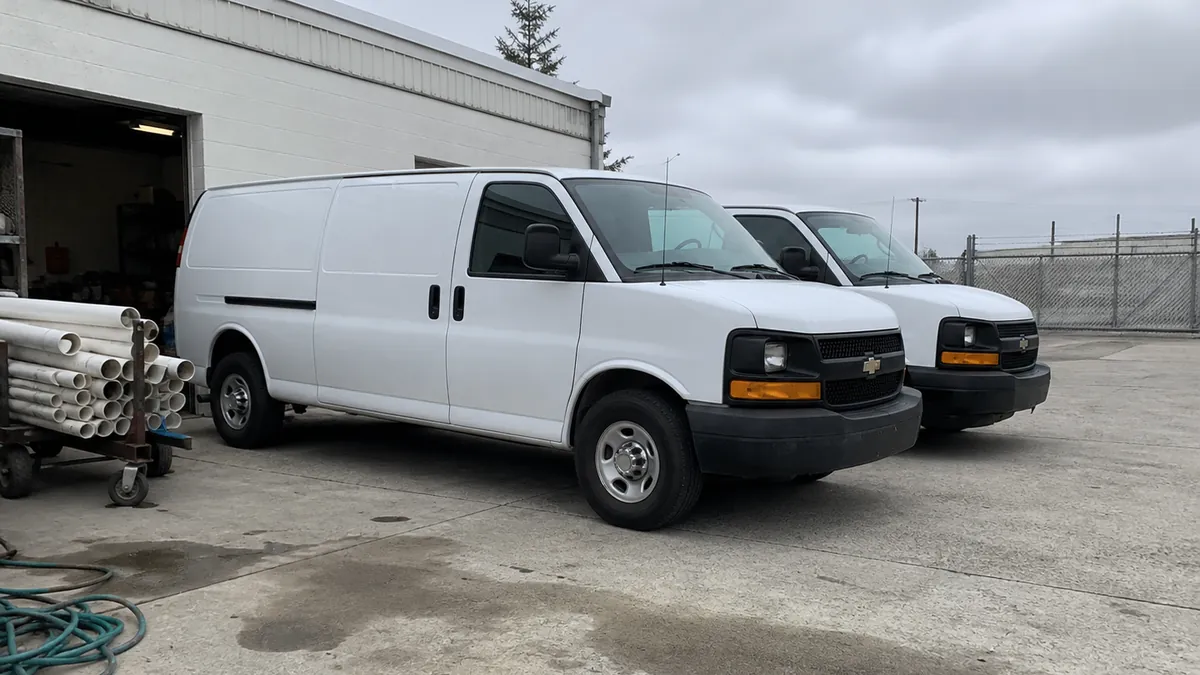
A plumbing business usually needs general liability, workers’ compensation once required by your state, and commercial auto for its work van or truck. Each policy leaves gaps, including your own tools, vehicle, employees’ injuries, and some service-related claims.
General liability covers bodily injury and property damage you cause to others. Workers’ compensation covers employee injuries when state law requires it. Commercial auto covers the van or truck used for work.
That is the short answer. The surprise is what those policies skip. General liability does not repair your own van. It does not replace stolen tools. It does not pay for injuries to your employees. Your personal auto policy may not cover a workday claim with tools in the vehicle.
General liability pays for damage you cause, not your own property
The SBA calls general liability a core coverage for any business. It protects against financial loss from bodily injury and property damage. It can also cover medical expenses, libel, slander, and the cost of defending lawsuits.
For a plumbing shop, that can mean a customer claims your work damaged a wall or caused an injury. It can mean you need a lawyer after a lawsuit. The policy is built around harm to other people and their property.
It does not cover every loss connected to your business. General liability does not pay for injuries to your own employees. Workers’ compensation is the coverage for that. It also does not pay to repair your own tools or van. Read the exclusions in your own policy before you assume a claim is covered.
Do not confuse this with a homeowner asking whether their insurance will cover a leak. That is a different question, and we cover how to handle it in the “is this covered by insurance” call.
Workers’ compensation starts with your state’s board
Workers’ compensation is run state by state. The U.S. Department of Labor says private employers’ workers’ compensation sits with the states, with no federal minimum standards. The department directs employers to their state workers’ compensation board.
Check that board before hiring anyone. States differ on small-firm exemptions and on whether coverage is required at all. A sole proprietor or owner who is not an employee is usually not covered by workers’ compensation. State law may allow that person to opt in.
Subcontractors can create another problem. In some places, hiring them can create the same workers’ compensation obligation. Ask your state board how it treats your workers and subcontractors.
Your first employee changes the insurance question. If you are considering that move, when a one-truck shop is ready for a second belongs on the same planning list.
Your work van may need commercial auto
A personal auto policy often will not cover driving done for business. A work van or truck usually needs commercial auto coverage.
Ask your insurer one plain question: “Would my personal auto policy pay a claim on a work day with tools on board?” Get the answer before you rely on that policy. Your van is not just transportation when it carries equipment to paid jobs.
Commercial auto is separate from general liability. General liability does not repair your vehicle after a covered accident. The policies handle different risks, so check both policies and their exclusions.
A BOP can bundle coverage, but it does not include everything
The SBA describes a business owner’s policy, or BOP, as an insurance package that combines typical coverage options. A BOP can simplify buying and may save money. Insurance guides usually describe it as general liability bundled with commercial property coverage.
Commercial property insurance protects against loss and damage to company property from events such as fire, smoke, wind, hail, and vandalism. That may help with business property at a shop or other covered location.
A BOP usually does not replace commercial auto or workers’ compensation. Those are generally bought separately. Ask what the package actually contains. Do not assume the word “package” means every risk is included.
Tools and service errors call for separate questions
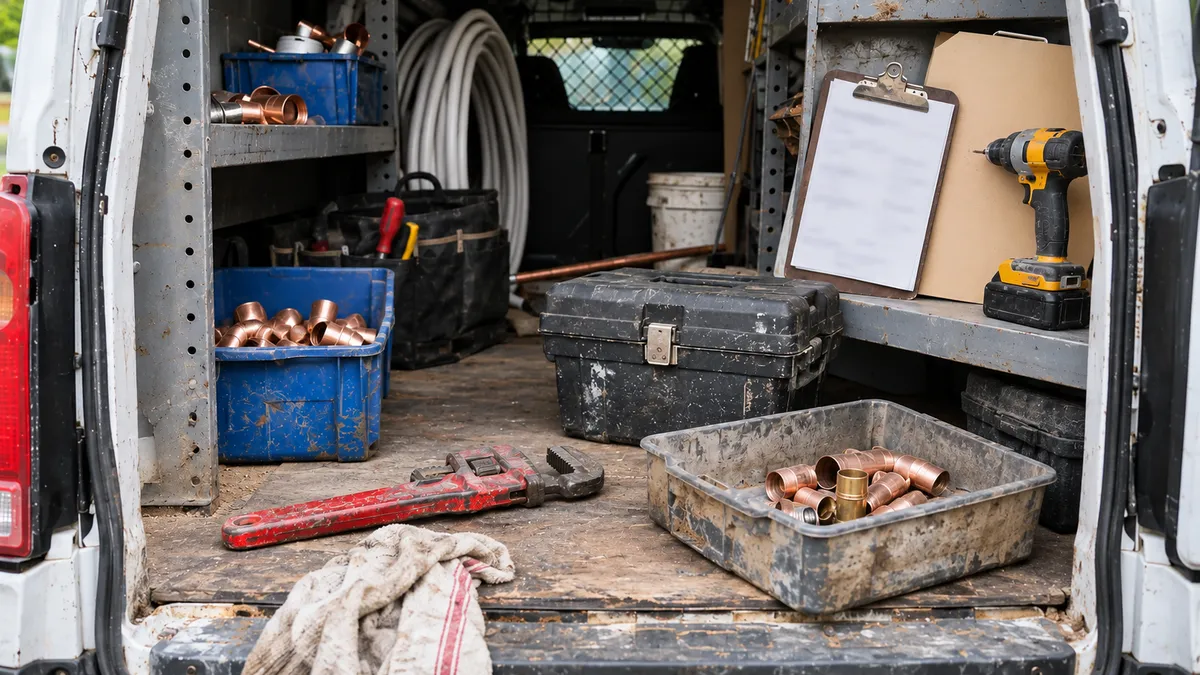
Tools and equipment coverage is a common optional extra. It matters when tools leave the shop and ride in the van. For the van break-in problem, see why tool theft is really a schedule problem.
Professional liability protects against malpractice, errors, and negligence. The SBA aims this coverage at businesses that provide services to customers. For a plumber, it is optional and depends on the work you perform.
Ask about it if your contracts or services create claims beyond physical damage. Do not buy it because the name sounds useful. Ask what kind of claim it covers and what it excludes.
Ask your agent these five questions
An independent agent who writes contractors can walk through your shop’s actual risks. Bring these questions:
- What does my general liability policy exclude?
- Does my BOP include commercial property, and what property does it cover?
- Does my van need commercial auto, and would personal auto pay a workday claim?
- When does my state require workers’ compensation for employees or subcontractors?
- Are my tools covered in the shop, in the van, and at a job?
Requirements and prices vary by state, coverage limits, and payroll. A customized quote is the only reliable cost. Insurance is also a cost to price into your work, alongside the other numbers covered in how to raise your rates without losing regulars.
A certificate can decide whether the job gets booked
The call pattern we see on shop call logs is clear. Property managers and commercial callers often ask before they book: “Are you licensed and insured, and can you send a certificate?” Often they ask in the first minute. Often it happens after hours, when the owner is not at a desk.
A certificate of insurance is the usual proof. Your insurer or agent issues it. Property managers may ask for one before work begins, as discussed in property management work.
Bella answers every call around the clock, books the job, and texts or emails you a summary. When someone asks for a certificate, Bella records who is asking, where to send it, and what job it is for. That lands in your call summary, so you can send it the next morning instead of losing the caller to the next name on the list.
Plans start at $95 a month for Starter. You can see the demo or call (669) 284-5564.
This is general information, not insurance or legal advice, so check your state board and ask an independent contractor insurance agent before you hire or renew.