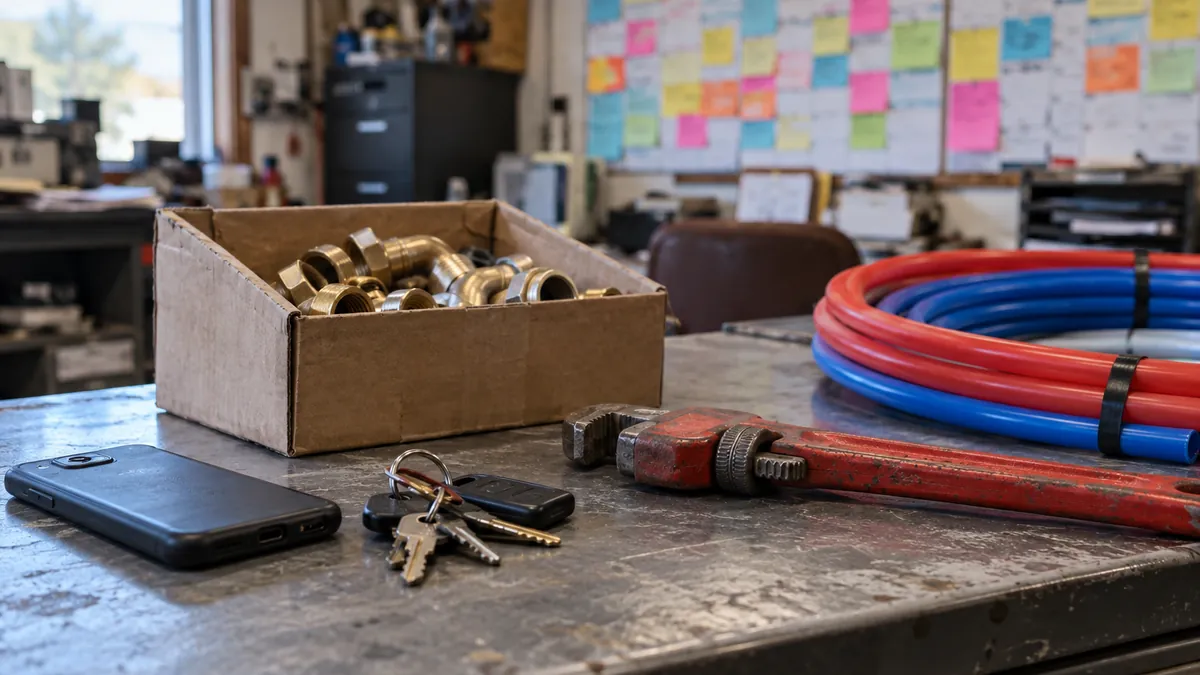
Van Break-In? The Tool Theft Problem Is Really a Schedule Problem
A broken-into van costs you tools, but the bigger hit is the booked day. A first-hour plan for the police, the insurer, and your customers.
The short version: When a van is broken into before the first appointment, the immediate problem is the schedule, not just the missing tools. File the police report, document the damage, contact your insurer, and tell every affected customer what is changing before they call you.
At 6:40 a.m., the van is damaged and the day is already moving
This is a composite example, not a real customer. We will call the owner Dale. He runs a two truck shop.
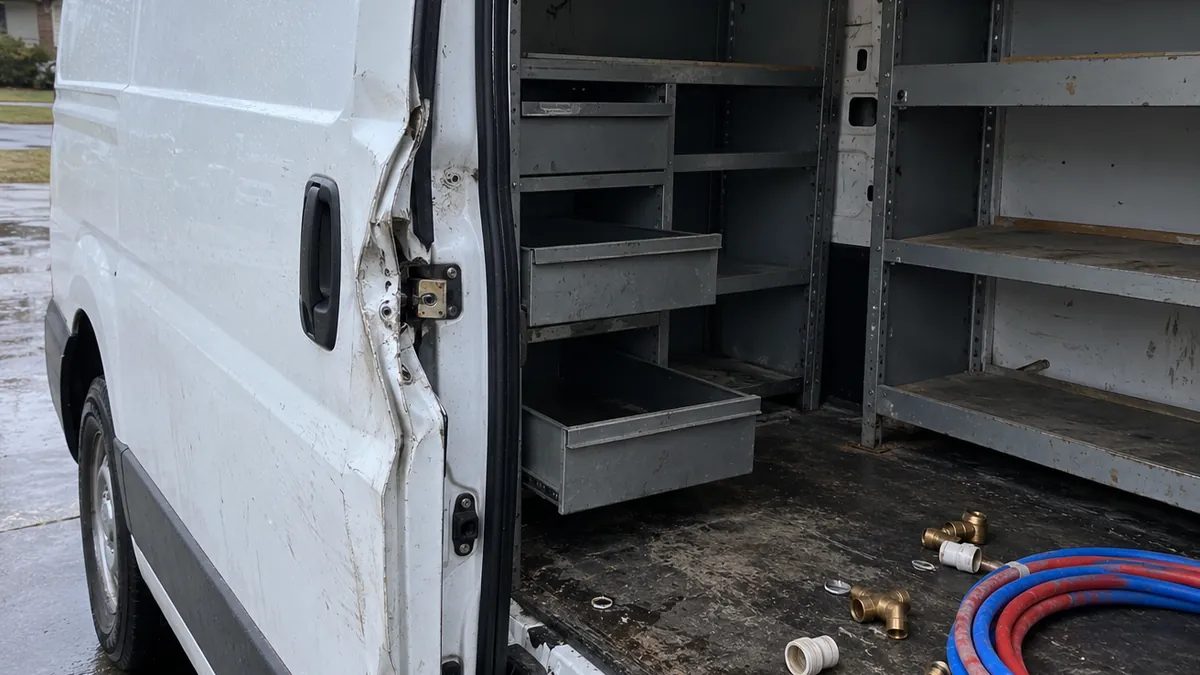
At 6:40 a.m., his tech found the van’s side door pried open. The tool drawers were empty. By 7:30, three customers had called asking where the tech was, and Dale was on hold with his insurance company.
That is the part most van theft advice misses. The theft does not happen in isolation. It lands in the middle of a booked day, with customers waiting and a tech who cannot do the work.
Locks matter. The schedule matters just as much.
The first hour has four jobs
First, file a police report before touching anything else. You will need the report number when you speak with the insurer.
Second, photograph the van. Take pictures of the damaged lock, the open door, the empty drawers, and anything else that shows what happened. Do not rely on memory later.
Third, call your insurer or broker. Ask whether tools in a vehicle are covered under your policy. Many commercial auto policies treat tools differently than they treat the van itself. Ask what documentation they need and write down the answers.
Fourth, pull up your tool inventory. If you keep photos and serial numbers on your phone, the claim is based on a list instead of a guess. If you do not have one, start writing down what is missing while the details are still fresh.
The goal is simple. Give the police and the insurer something specific to work from. The is this covered by insurance call goes better when you already know what was in the van.
The schedule cannot wait for the claim
The insurance call can take time. The day’s jobs cannot.
Look at every appointment assigned to that tech and sort them quickly. Some jobs move. Some can go to another tech. Some may be possible with a borrowed tool set. You do not need a perfect plan before you start calling customers. You need a clear next step for each customer.
Tell affected customers before they call you. Give them a new appointment time if you have one. If you do not, tell them when you will update them.
Customers forgive a change with notice. They do not forgive a tech who never shows.
This is where phone coverage matters. While you are speaking with the police, your insurer, or the tech, calls still come in. A missed call becomes another problem on top of the broken van. The same goes for no-shows and last-minute changes. See no-shows are eating your schedule for the cost of letting the day run without a response.
Bella keeps the phone answered while you handle the damage
Bella answers every call around the clock. While you are dealing with police and insurance, customers who call get an answer and a booking instead of voicemail.
Bella can take a message that a job is moving, offer new times, and send you a call summary by text or email. That gives you a record of what each customer asked for and what was booked while your attention was somewhere else.
On the Starter plan, Bella provides 24/7 call answering, job booking, calendar sync, and call summaries by text or email. Starter is $95 per month. Growth is $295 per month and adds two-way texting and appointment reminders. Pro is $495 per month.
Bella handles inbound calls on Starter. On Growth, she can also handle texting and reminders. She does not call customers outbound on Starter.
You can hear Bella on the demo page. The demo line is (669) 284-5564. The shop line is (707) 620-5284.
If texting is part of how you update customers, read why texting customers back closes more jobs. If you handle emergency work, the emergency calls guide covers what your answering service should do when the phone starts filling up.
Change the van routine after the break-in
The National Insurance Crime Bureau (NICB) recommends parking in well-lit spots because visibility deters thieves. Thieves walk lots testing door handles to choose a target. Extra layers such as alarms, kill switches, or GPS tracking help.
For business fleets, NICB recommends vehicle tracking and says trucks are most vulnerable when sitting idle. Its hotline is 800-TEL-NICB.
Your routine matters too. Take the high-value tools inside at night. Keep the inventory current, with photos and serial numbers on your phone. Mark the tools so they are easier to identify.
These steps do not undo a theft. They reduce the confusion that follows it and give you more to work with if it happens again.
Before the next morning starts, assign someone to check the van, confirm the first appointments, and verify that the phone is covered. If a tech has no tools, decide which jobs move, which jobs another tech can cover, and which jobs can wait.
Then tell the customers. That is the part to do differently.