The Call From Outside Your Service Area
The address is the one intake question most shops ask last. Here is what it costs, and the simple rule one shop wrote so nobody has to guess on the phone.
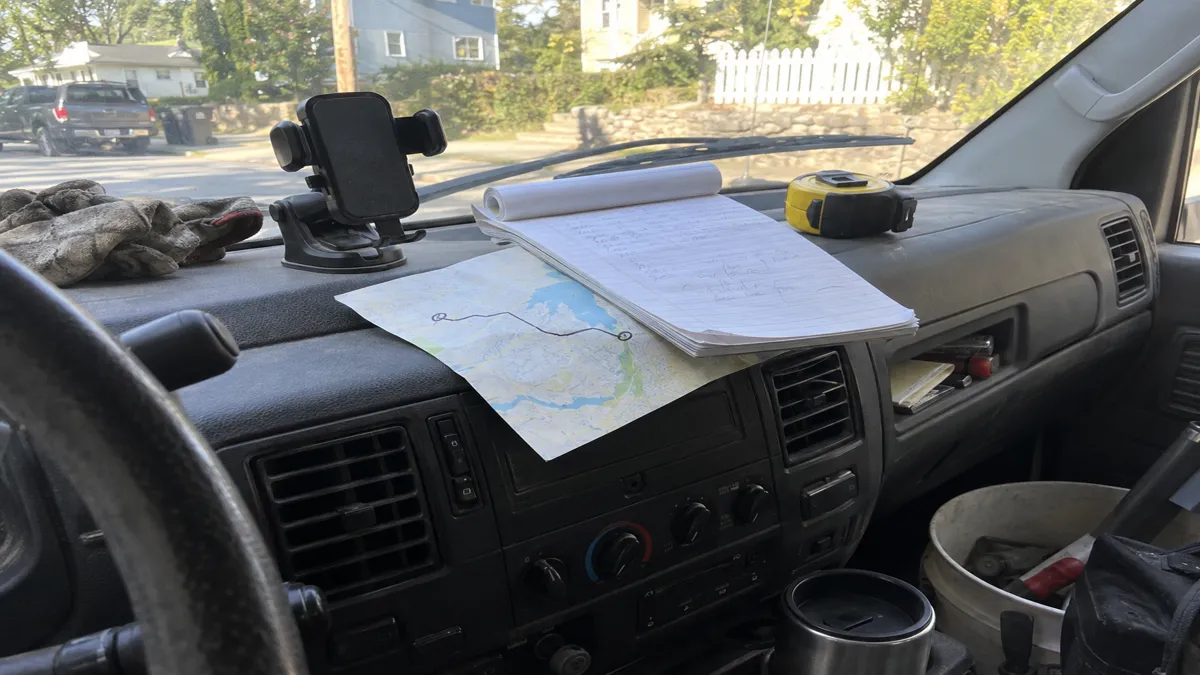
Curtis runs three trucks out of a shop on the edge of a mid-sized city. On a Thursday morning last fall, his office took a call about a running toilet and a slow bathroom sink. Nice caller. Ready to book. His office booked her for that afternoon.
Nobody asked for the address until the end of the call. It was fifty-two miles out.
The tech drove an hour and fifteen each way for about ninety minutes of work. Curtis billed the job at his normal rate because that is what his office had quoted, and by the time he did the math that evening, the truck had been gone most of the day for less than he would have made on two calls in town.
He did not blame the person who answered the phone. She had done exactly what she was trained to do, which was be helpful and get the job on the board.
The address is not a closing detail
Watch how a plumbing call actually goes. The caller describes the problem. Your office asks what it is doing, how long it has been doing it, whether the water is off. Then name, then phone number, then “and what is the address there.”
By that point in the conversation, you have already said you can be out this afternoon. The caller has relaxed. She thinks she has a plumber. If the address turns out to be forty-five minutes past where you actually want to go, whoever is on the phone now has to walk something back, and most people would rather eat the drive than do that.
That is the whole failure. Not the distance. The order of the questions.
Move the service address up front and the entire problem disappears, because now you are deciding before you have promised anything. It is the same principle as everything else you get on the call before you roll the truck. Information you take early costs nothing. Information you take late costs you a truck.
”In or out” is the wrong question
Curtis’s first fix was to draw a circle on a map and tell his office anything outside it was a no. That lasted about three weeks, until he found out his office had turned down a restaurant with a recurring grease problem because it was two miles past the line.
Distance alone was never the real test. The real test is whether the drive is worth what is at the other end of it. So he rewrote it as three buckets instead of two.
In. Book it, no questions, normal rates. This is most of the map.
Out. Politely no, and mean it. Take the details anyway, and tell the caller plainly that you are not the right shop for that address so they can stop waiting on you and call someone else. That is a real courtesy and people remember it.
Yes if. This is the bucket that was missing. Some calls out past the line are worth taking, and Curtis wrote down exactly when: if the scope is big enough to carry the drive, if the caller will accept the longer-distance trip charge, if it is commercial or a property with more than one unit, or if a truck is already headed that direction that day.
The third bucket is what turns “we don’t go out there” from a policy into a conversation. It also puts a number on the drive, which is really just the trip charge question applied to geography. A caller who is forty miles out and genuinely stuck is usually not surprised to hear the drive costs something. They have been calling shops all morning.
Why this gets worse when work is thin
A full schedule makes this easy. When your board is packed, nobody drives ninety minutes for a toilet flapper, because there is no room to.
A thin schedule is where shops get hurt. When the phone slows down, a far-away job stops looking like a bad trade and starts looking like better than nothing. Sometimes it is. But it is a decision worth making with a rule you wrote on a calm afternoon, not one you make at nine in the morning while looking at an empty column.
The other thing a thin week does is make the person answering your phone reluctant to say no to anything. That is a reasonable instinct and it is also how a slow week turns into an unprofitable one.
What changed
Curtis moved his overflow and after-hours calls to Bella, mostly because he was tired of losing calls while all three trucks were out.
The service address moved to the top of the intake, which was the part that actually fixed this. Bella asks where the work is before anything else, checks it against Curtis’s three buckets, and handles each one differently. In-area calls get booked. Out-of-area calls get a straight answer and a note to Curtis anyway. The “yes if” calls get the honest version: we can come, the drive adds a charge, here is what it is, do you want us.
Curtis expected to lose some of those. He does lose some. He also stopped finding out about the fifty-two mile calls at dinner time.
The unexpected part was the log. Because the far calls were being written down instead of quietly declined or quietly absorbed, Curtis could see for the first time where they were coming from. Two zip codes on the north side accounted for most of them. That is not a decision he has made yet, but it is the first time he has had anything real to base one on. The same details staying on file that make a repeat customer easy also tell you where your next truck might belong.
The takeaway
Ask for the service address in the first thirty seconds of every call. Not at the end.
Then decide your map once, in writing, with three buckets rather than two, and let whoever answers the phone read from it instead of guessing. Most of what looks like a service area problem is really just a question asked in the wrong order.
If your phones are being covered by whoever happens to be free, hear how Bella handles a call or dial the demo line at (669) 284-5564 and try it yourself.