Should Your Plumbing Shop Specialize, or Keep Taking Every Call?
Drains only, water heaters only, or everything that rings? How a small plumbing shop can test a specialty with its own call history, and why the phone decides whether it sticks.
A one to three truck shop can make more money by refusing some plumbing calls. It can also make the phone much quieter.
That is the trade. You may be thinking about drains and sewer only, water heaters only, repipes, or service and repair with no new construction. The right answer depends on the work already coming through your phone, not on what sounds good on a truck wrap.
Specialization can make each truck easier to run
Some job types pay better for the time they take. Some keep you closer to the shop. Some fit the tools and truck stock you already own. You may also simply like certain work more than the rest.
Those details matter on a small crew. A specialist truck can carry deeper stock for fewer types of jobs. That can mean fewer trips back for parts. Less driving between parts runs gives you more time for paid work and fewer gaps in the day.
A focused service can also make pricing easier. If you know the work, the common problems, and the parts you use most, you can build prices around that work instead of making every call a fresh guess. Shops thinking through that choice should also look at how they price each visit, as covered in flat rate or hourly pricing on every call.
Specializing can work in the other direction, too. Some shops add a service they do not currently offer because the equipment and training fit the business. Trenchless sewer repair is one example of adding a specialty service.
A narrow service list gives you fewer calls to choose from
The first risk is simple. Fewer types of work means fewer total calls to pick from.
Seasonal swings also hit harder when one job type carries the shop. Water heater work and burst pipes are seasonal. If that is most of your business, a slow stretch in that category has a direct effect on the schedule.
There is a customer cost, too. A homeowner calls because the faucet drips. You say no because you only handle drains. Later, that same homeowner has a main line problem. They may not call you back. You gave up the chance to become the plumber they call first for everything.
That relationship has value. A homeowner who already trusts you may call you for a water heater, a leak, a toilet, or a sewer issue. A shop that takes every small job can keep that relationship alive, even when the small job is not the most profitable call on the board.
That is why many small shops take a middle path. They market and price around a core specialty. They still take quick, small jobs from existing customers. They refer the rest.
Your call history will show whether the specialty is real
Do not decide from a gut feeling. Look back over a couple of months of calls and completed jobs.
Which job types came in most often? Which ones did you enjoy? Which ones made money after drive time and return trips? Which ones did you dread seeing on the schedule?
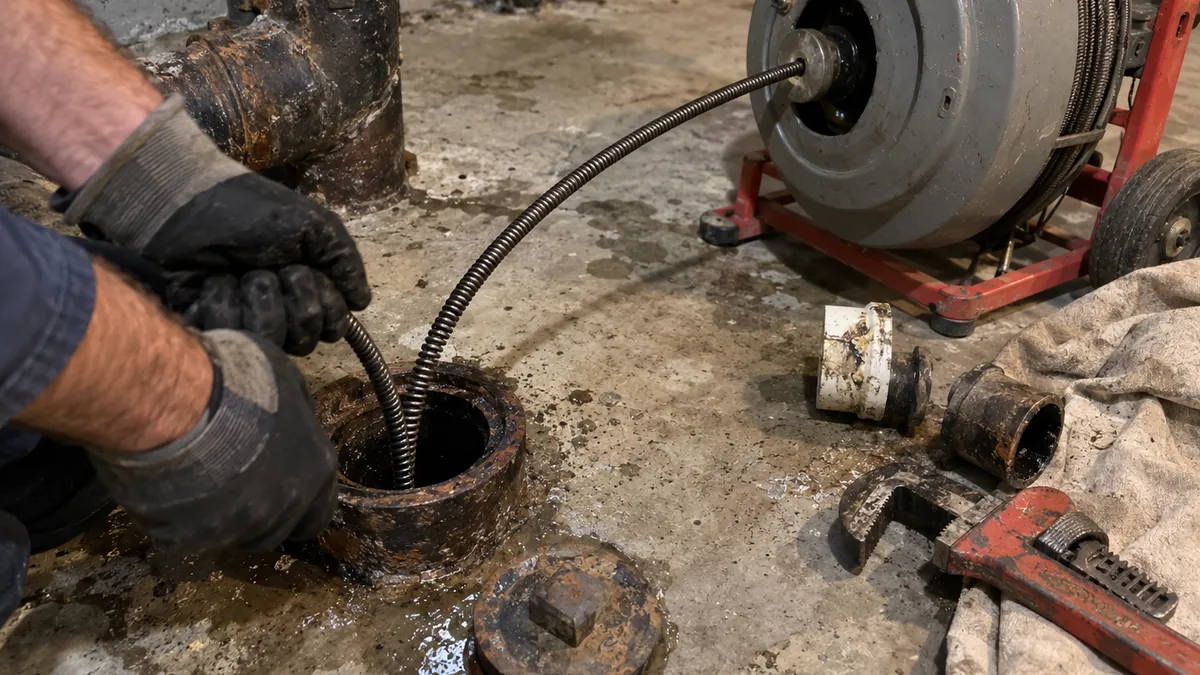
The call summaries often make the answer plain. For a drain heavy shop, the summaries can read like the same few phrases over and over: “kitchen sink backed up,” “main line,” and “tub draining slow.” Mixed in are the one off asks, such as “can you swap my garbage disposal” or “my faucet drips.” Reading those calls back in one sitting shows the real mix more clearly than a gut feeling does.
Look at repeat work, too. Drain service can be a repeat customer business, which is a different decision from taking one drain call whenever the schedule has an opening. The difference matters when you consider whether drain cleaning calls should be one time or recurring.
You may find that the work you want to stop taking is not the work you get most often. You may find that the work you dislike brings enough return trips to hurt the day. Write those findings down before changing your service list.
The phone has to enforce the service list
Specialization only exists if the phone follows it. If every caller still hears, “Sure, we can come take a look,” the specialty exists on the website and nowhere else.
The person answering needs clear rules. Which calls get booked right away? Which calls are booked only for existing customers? Which calls are politely declined and sent elsewhere?
Declining well matters. Be quick and polite. Have one or two local names ready for the work you are dropping. The caller may not hire you, but they can still remember your shop as helpful. A clear referral is part of handling a call from outside your service area.
Find another local shop that does the work you are leaving behind. Trade referrals both ways. A specialist sending general repair calls to a generalist, while the generalist sends drain or sewer calls back, is a normal arrangement.
Bella can answer the phone 24/7 for the shop, triage emergencies with instant alerts, book jobs into the shop’s calendar, and send a summary of every call by text or email. Every plan includes call summaries. On the Pro plan, which is $495 per month, custom call scripts let you set which jobs to book, which to take only for existing customers, and which to turn down with a referral. Plans also include Starter at $95 per month and Growth at $295 per month.
Your website should stop attracting the wrong calls
Once you choose the service mix, make the public message match it. List the specialty clearly on your website and Google Business Profile. State the work you take. State the work you do not take when that helps avoid confusion.
Wrong calls will not disappear after one edit. But a clear service list gives callers a chance to choose the right shop before they dial. Your Google Business Profile is part of that phone strategy, since the profile can affect which calls your shop receives.
Do not flip the switch overnight. Pick the one job type you most want to stop taking. Set the phone rules for it. Keep the rest of your service list unchanged and watch what happens for one month.
Read the call summaries when the month ends. Then decide whether to stop another type of work, accept it only for existing customers, or bring it back.
To hear Bella answer, call the demo line at (669) 284-5564.