The Slab Leak Call: What to Ask Before You Quote
Slab leaks show up as vague symptoms and turn into some of the biggest jobs you run. Here's what to get on the phone before you even think about a number.
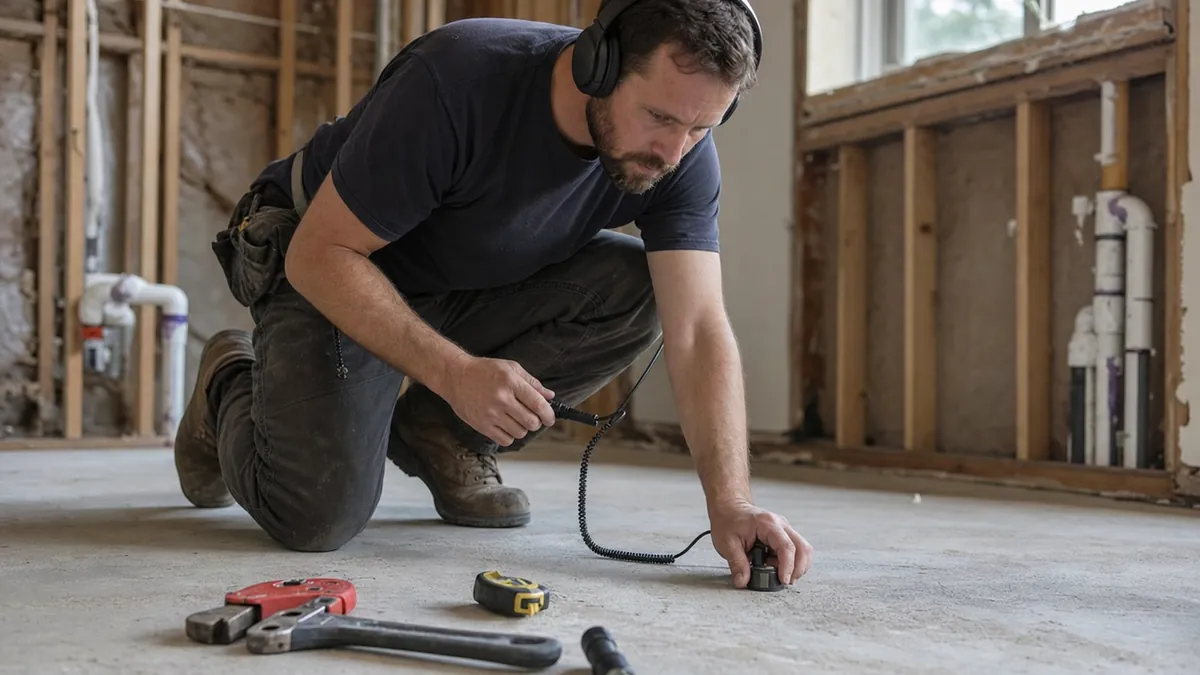
A slab leak almost never announces itself as a slab leak. The call comes in as “my water bill doubled and I don’t know why,” or “there’s a warm spot on the kitchen floor,” or “I can hear water running with everything shut off.” The homeowner has no idea what’s wrong. Your job on that first call is to figure out whether this is a slab leak before you ever talk price, because slab leaks are some of the most expensive, most variable jobs you’ll quote all year.
What a slab leak call sounds like
Slab leaks hide. The water’s running under the foundation, so the symptoms are indirect: a spike in the water bill, a warm or damp patch on the floor, low pressure, the sound of running water, sometimes a faint mildew smell. Half the time the customer is calling about the symptom and hasn’t connected it to plumbing at all. That’s fine: the symptom is the clue.
What to ask before you quote
This is where a clean intake earns its keep, the same way it does on a water heater call or a sewer backup. Get these on the phone:
- What’s the symptom, exactly? Warm floor, high bill, sound of water, low pressure, visible moisture.
- Has the water bill jumped? By how much, and when did it start.
- Slab or raised foundation? A leak under a slab is a different job than one in a crawlspace.
- How old is the home and the plumbing? Copper from a certain era fails in predictable ways.
- Have they shut the water off? And does the meter still spin with everything closed: that’s a strong tell.
- Any flooring or finish over the suspected area? Tile, hardwood, and finished slabs all change the access.
These are the kinds of qualifying questions that belong on every call before you roll the truck; they just matter more here because the wrong assumption is so costly.
Why you can’t quote it blind
A slab leak might be a small reroute through a wall, or a spot repair under jackhammered concrete, or a sign the whole house needs a repipe. That’s a huge spread, and you can’t know which until someone locates it. Throwing out a number on the phone is how you either scare off a good job or commit to a price that doesn’t survive first contact with the actual leak. The honest answer to “how much?” here is to explain that it depends on locating it first.
Get it scoped and booked
The goal of the slab leak call isn’t a quote. It’s to recognize the symptoms, get a leak-detection visit on the calendar, and set the expectation that pricing comes after you find it. Slab leaks also cluster in certain conditions, and they show up more as the ground heats and shifts in summer, so the calls come in waves, often when you’re already slammed.
That’s exactly when the vague “my floor feels warm” call gets brushed off or sent to voicemail. Bella catches it, asks the right questions to flag it as a possible slab leak, and books the detection visit, so a five-figure job doesn’t slip away because it came in sounding like nothing.
The takeaway
Slab leaks introduce themselves as small, weird symptoms and turn into your biggest tickets. Don’t quote them on the phone and don’t let the vague-sounding ones slip. Ask the right questions, recognize the pattern, and book the visit that lets you actually price it.