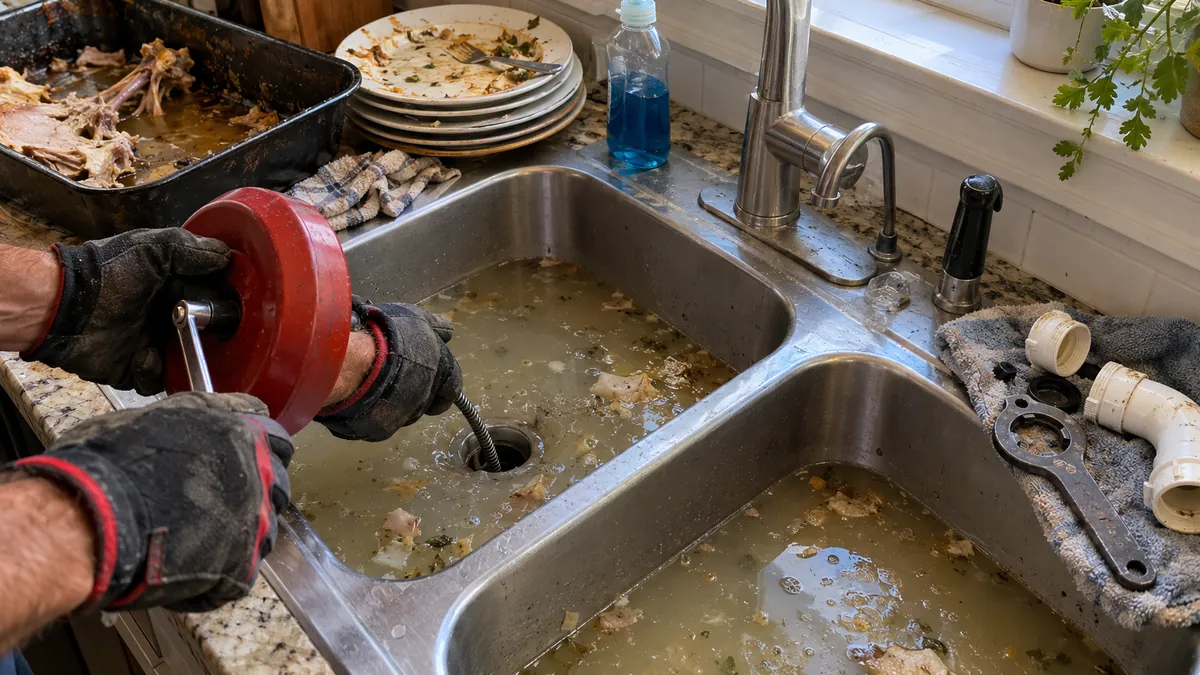
The Boil-Water Notice Call: What to Tell Customers When the Utility Issues an Advisory
When a boil-water advisory goes out, your phones light up. Here is what to tell callers, what to leave to the utility, and which calls are worth a truck.
TL;DR: The water utility decides whether a boil-water advisory is lifted and what customers must flush. Your shop can explain the utility’s instructions, perform household plumbing work after the advisory, and send a technician when discoloration, sputtering, or low pressure continues.
A boil-water notice can light up your phones within minutes. The cause may be a main break, pressure loss, or treatment problem. Callers ask whether the problem is inside their house, whether they need to flush the water heater, and whether you can come right away.
Calls during an advisory come in a wave, often within the first hour after the notice goes out. Most are not repair jobs at all. A typical day has a pile of “is my water okay?” questions mixed in with maybe one or two real calls, such as a customer whose water heater is making noise or whose water is brown. The real jobs hide in the pile.
Your job is to separate the safety question from the plumbing question.
Who decides the water is safe
The water utility decides whether the water is safe to drink. Your shop does not.
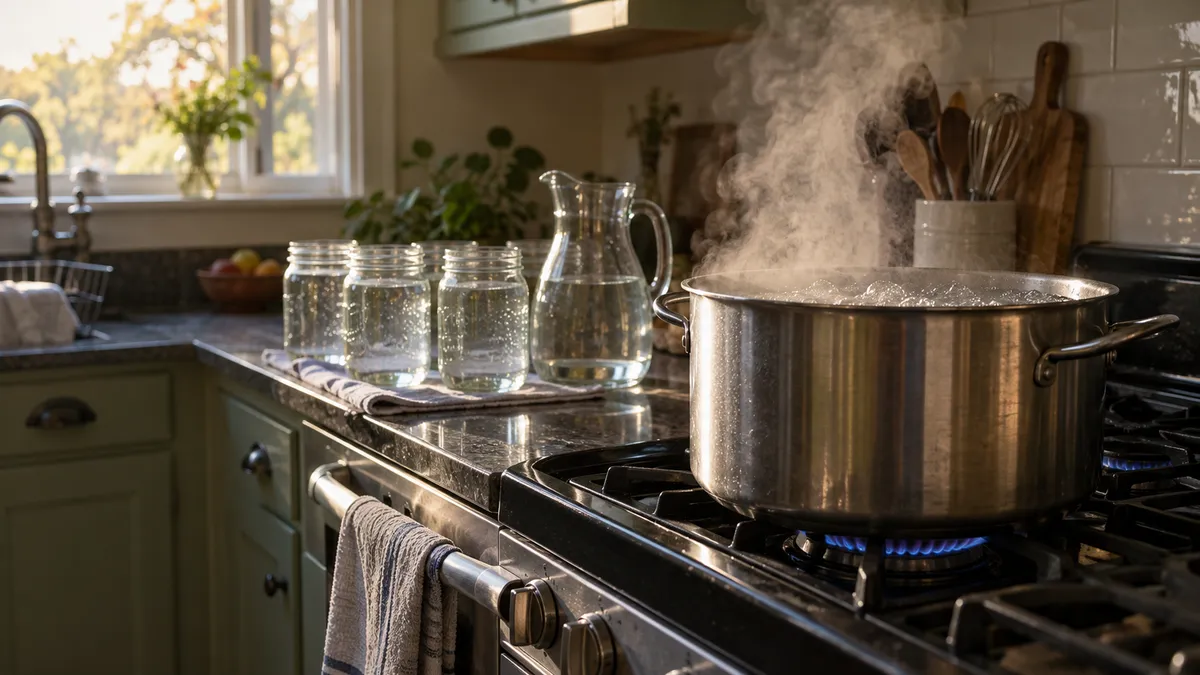
Tell callers to read the utility’s notice and use the utility’s phone line for questions about the advisory. The CDC says clear water should be brought to a rolling boil for 1 minute to kill disease-causing organisms. At elevations above 6,500 feet, the water should boil for 3 minutes. Boiling does not remove chemicals.
Do not tell a caller, “Your water is safe now.” You do not have the utility’s testing or release decision. Say plainly that the utility issued the advisory and the utility will say when it is lifted.
The EPA says the water system should tell customers if, how, and to what extent they need to clean their water service line and appliances connected to it. After the advisory is lifted, the notice may tell customers to flush faucets and appliances before normal use. The exact flushing time varies with the plumbing, so customers should contact the utility for specifics.
That answer gives the caller a source for the public health question while leaving your shop responsible for the plumbing work that belongs to you. It also keeps the first call from turning into a promise you cannot support.
What to tell the caller
Give your office a short answer that staff can repeat:
“The utility decides when the water is safe and what you need to flush. Please follow the notice or call the utility. If you have brown water, low pressure, a sputtering faucet, or a water heater problem, we can help with that plumbing issue.”
Then ask for the address and the actual problem. A caller who starts with “Can I drink the water?” may really be calling about a noisy heater or brown water at one faucet.
Use the same basic discipline described in Questions Every Plumbing Call Should Answer. Get the customer’s name, address, and a clear description of what is happening. Do not upsell whole-house filtration or treatment systems on the first call. Mention those only if the customer asks.
Many callers only want to be told what to do. A calm script keeps the real service calls from disappearing in the noise. The same sorting habit helps with the no-water call, where the first job is also finding out whether the issue is local or part of a larger event.
After the advisory is lifted
Follow the utility’s instructions first. The utility may tell customers to flush faucets and appliances before returning to normal use.
For a home affected by a pressure drop or water main break, CDC home guidance says to turn the cold water on fully and let it run for 2 minutes. Turn it off. Then turn the hot water on fully and run it until it starts to feel hot and runs clear with no discoloration.
Flushing means opening valves and faucets so water flows and removes standing water from interior pipes. The time needed varies with the plumbing. If the utility’s notice gives different or more specific instructions, the customer should follow that notice.
A customer may ask whether the water heater needs to be flushed or drained. A shop can perform that work when requested. CDC home guidance says manufacturers recommend flushing a water heater annually, before moving into a home, after plumbing work, and when tap water is discolored.
The notice may also address refrigerators, filters, ice makers, or other connected appliances. Confirm what the utility says before you advise the customer. You can swap a refrigerator or whole-house filter cartridge if the customer asks and the utility’s instructions support that work.
CDC guidance for healthcare facilities goes further. It discusses discarding ice from ice machines and sanitizing them according to the manufacturer, changing point-of-use filters, and in some cases draining and refilling water heaters set low. That is facility guidance, not a list of requirements for homes. For a home, the utility’s notice is the authority. Tell the customer to follow what the notice says about appliances.
The calls worth a truck
Some conditions remain after the utility lifts the advisory. Water that stays discolored is one. Sputtering faucets and low pressure are others.
Those can be household plumbing issues. A pressure drop may stir sediment in a water heater. Sediment may also clog aerators. A technician can inspect the affected fixtures, check the heater, and find out whether the problem is inside the home.
Ask where the customer sees the problem and whether it affects cold water, hot water, or both. If the issue is only at one fixture, that points your call-taking in a different direction than a problem throughout the house. For another call where the symptom may be confused with a larger utility issue, use the same careful questions you use for the high water bill call.
The caller may not need an emergency visit. Do not promise an immediate arrival unless you have one available. Take the details, set the correct expectation, and schedule the visit based on the actual plumbing symptom. Your emergency call handling should do the same thing.
Bella, Plumber Secretary’s phone assistant, answers the wave around the clock. When a caller asks about a boil-water notice, Bella can explain that the shop does not rule on water safety, point the caller to the utility, and still take down a name, address, and the real problem, such as a water heater, brown water, or low pressure. Those details get the real jobs to you.
Bella runs from $95 a month on Starter, $295 on Growth, and $495 on Pro. Call the shop at (707) 620-5284. To hear how Bella handles a call like this, call the demo line at (669) 284-5564.
Put the utility referral and the short script in front of whoever answers your phone. Ask for the address and the actual plumbing symptom on every advisory call. Book the visit for continuing discoloration, sputtering, low pressure, or a water heater problem, not for a safety ruling your shop cannot make.